Commercial fit-out projects often run across several months or financial quarters, involving multiple vendors, changing material requirements, design approvals, and tightly connected execution schedules. While these projects can generate substantial revenue, even small delays or cost overruns can reduce expected profits. Protecting margins requires accurate BOQs, structured procurement, realistic timelines, and continuous visibility into project costs and progress.
Commercial Fit-Out Projects Are Becoming More Complex
India's commercial interior market continues to create opportunities for design-build firms, contractors, and interior execution companies.
Industry research cited in the market brief estimates that commercial projects accounted for 74.44% of India's interior design market in 2025, supported by demand associated with Grade-A offices, retail developments, and commercial leasing activity.
Editorial note: Verify this market-share figure and its precise category definition against the original industry report before publishing.
Unlike smaller residential interiors, commercial fit-outs often involve larger spaces, multiple stakeholders, specialized materials, and strict completion requirements.
A commercial office project, for example, may include space planning, design approvals, partitioning, electrical installations, flooring, furniture procurement, finishing, and final handover.
Each activity depends on the successful completion of other activities.
As project duration increases, managing these dependencies becomes more challenging.
For design-build businesses, the opportunity is significant. But managing commercial projects profitably requires more than delivering attractive spaces.
It requires operational control throughout the project lifecycle.
Why Multi-Quarter Commercial Fit-Outs Put Profit Margins at Risk
A commercial fit-out may begin with a carefully prepared budget and an agreed completion timeline.
However, several things can change between project initiation and final handover.
Material prices may increase. Client requirements may evolve. Design approvals may take longer than expected. Vendors may miss delivery commitments, and execution teams may need to adjust their schedules.
Individually, these changes may appear manageable.
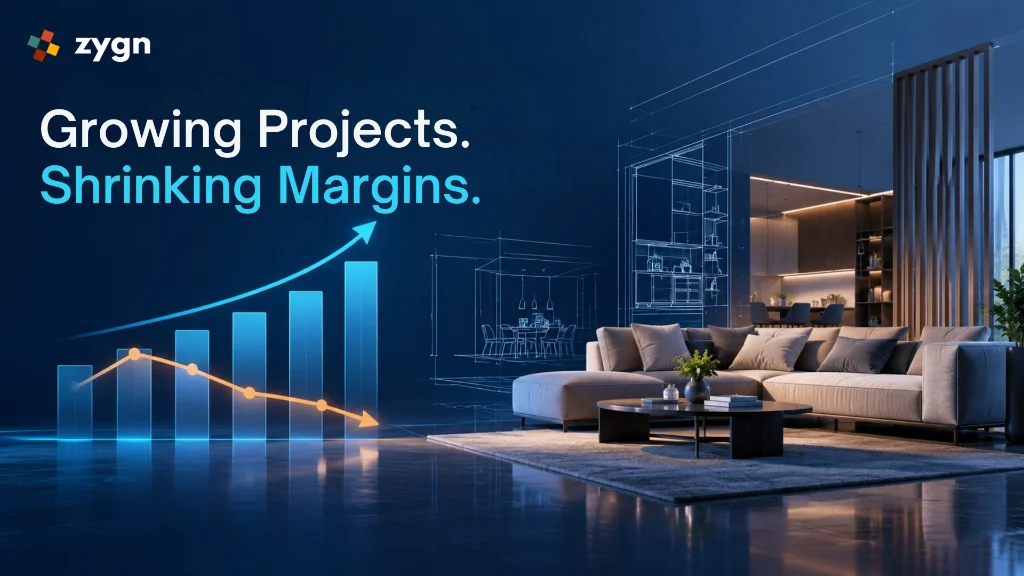
Across a project running for several months, their combined financial impact can become substantial.
The biggest challenge is that project costs and timelines are closely connected.
A delayed material delivery may extend labour requirements. A revised design may affect procurement quantities. A late approval may force multiple teams to reschedule work.
Without consistent monitoring, the actual cost of execution can gradually move away from the original estimate.
This is why commercial fit-out project management must focus on protecting both the schedule and the project margin.
The Biggest Challenges in Managing Long-Duration Fit-Out Projects
The Bill of Quantities (BOQ) provides the foundation for estimating materials, quantities, and project costs.
But commercial interior projects rarely remain completely unchanged from the initial quotation to final execution.
Clients may request additional work, specifications may be revised, or site conditions may require modifications.
When BOQ changes are maintained across different spreadsheets or communicated informally, teams can lose track of which quantities and costs are currently approved.
This creates a risk of purchasing materials based on outdated information or executing work without accurately recording its financial impact.
Structured BOQ management helps businesses maintain clearer project estimates and coordinate changes throughout execution.
Commercial fit-outs require careful coordination between material requirements, vendor commitments, purchase orders, and site schedules.
A delay in procuring partitions, lighting, flooring, or furniture components can affect several downstream activities.
At the same time, urgent purchases and supplier price variations may increase the cost of execution.
When procurement information is disconnected from the project plan, managers may struggle to identify which materials are pending, which orders have been placed, and where additional spending is occurring.
Structured procurement management supports more consistent purchasing processes and better coordination between procurement and project teams.
Commercial fit-outs involve activities that must happen in a particular sequence.
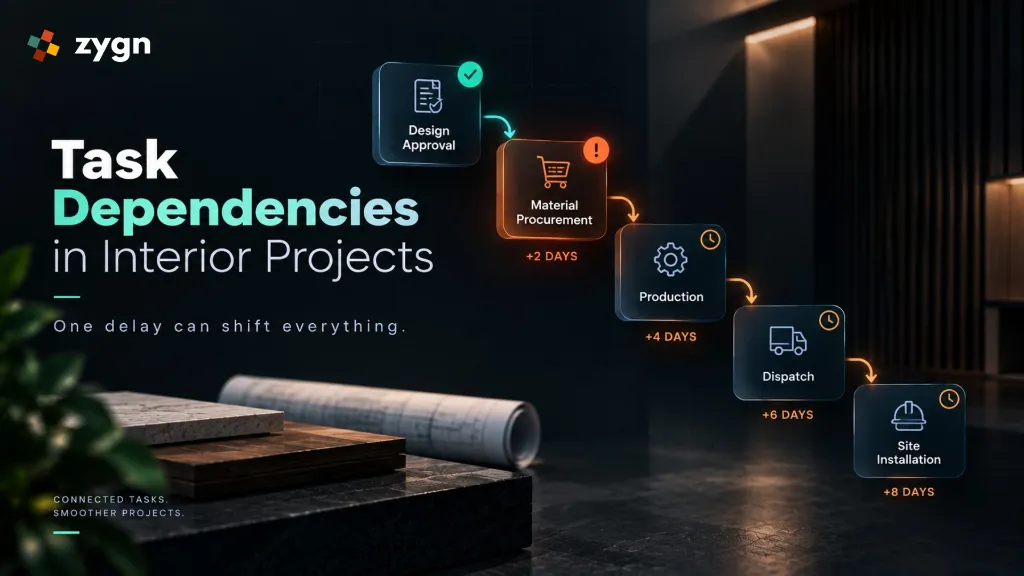
Design Approval → Procurement → Site Preparation → Installation → Finishing → Handover
If design approval is delayed, procurement may begin later than planned.
If procurement is delayed, installation teams may be unable to proceed.
These dependencies make project scheduling particularly important.
A simple task list may show which activities are pending, but it does not always communicate how a delay affects the remaining project timeline.
A commercial project can appear to be progressing well while its financial performance is deteriorating.
Additional purchases, extended labour requirements, and repeated site visits can gradually increase costs.
If project expenses are maintained separately from BOQ estimates and procurement records, managers may not recognize the financial impact until much later.
For multi-quarter projects, reviewing costs only at completion is especially risky.
By that stage, opportunities to control overspending may already have passed.
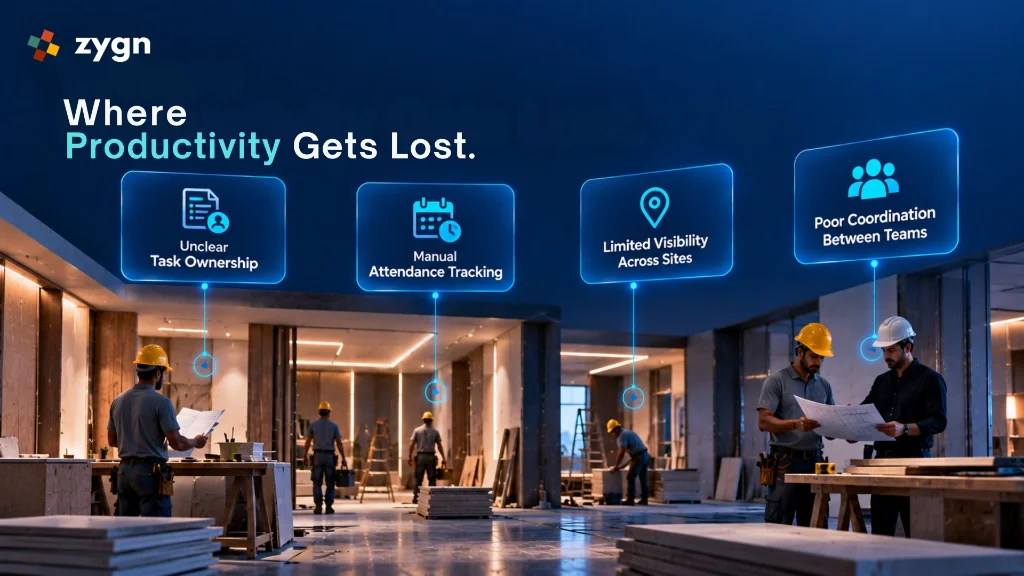
Commercial projects require constant coordination between designers, project managers, procurement teams, vendors, and site supervisors.
When instructions are scattered across messages, calls, and different documents, teams may work with incomplete or outdated information.
This can result in repeated follow-ups, incorrect assumptions, and unnecessary rework.
Clear ownership and centralized project information help reduce these coordination problems.
Why BOQ Control Matters Throughout a Commercial Fit-Out
A BOQ should not be treated as a document that becomes irrelevant once the project is approved.
It remains an important reference throughout execution.
As materials are purchased and project requirements change, managers need to understand how actual costs compare with the original estimate.
Consider a hypothetical commercial fit-out with an approved project value of ₹1 crore.
| Project Financials | Amount |
|---|---|
| Contract Value | ₹1,00,00,000 |
| Estimated Project Cost | ₹82,00,000 |
| Expected Profit (18% Margin) | ₹18,00,000 |
| Additional Material Costs | + ₹3,00,000 |
| Delay and Rework Costs | + ₹2,00,000 |
| Actual Profit (13% Margin) | ₹13,00,000 |
Illustrative example only. These amounts do not represent industry-average project costs or margins.
Although the project revenue remains unchanged, additional execution costs reduce the expected profit by ₹5 lakh.
This demonstrates why controlling BOQ changes, purchases, and project expenses matters throughout a commercial fit-out.
The earlier cost deviations are identified, the more opportunity project managers have to respond.
How Gantt Charts Help Manage Multi-Quarter Project Timelines
Commercial fit-out projects often contain dozens of interdependent activities spread across several months.
A Gantt chart provides a visual representation of these activities against a timeline.
It helps project managers understand when each activity should begin, how long it is expected to take, and which tasks depend on others.
For example, a six-month commercial office fit-out might follow this illustrative schedule:
| Project Phase | Planned Timeline |
|---|---|
| Design Development and Approvals | Month 1 |
| BOQ Finalization and Procurement Planning | Months 1–2 |
| Material Procurement | Months 2–4 |
| Site Preparation and Services | Months 2–3 |
| Interior Installation and Execution | Months 3–5 |
| Finishing, Inspection, and Handover | Months 5–6 |
Some activities overlap, while others cannot begin until earlier work is completed.
If a critical procurement activity moves from Month 3 to Month 4, the project manager needs to understand whether installation and handover dates will also be affected.
This is where Gantt chart project management software becomes useful.
Instead of relying only on disconnected schedules, project teams can use a structured timeline to understand sequencing, dependencies, and changes.
For multi-quarter projects, keeping the timeline updated is essential because the original plan may no longer reflect actual site conditions.
How to Protect Profit Margins Across Multiple Quarters
Long-duration commercial projects require regular operational and financial reviews.
The following practices help design-build firms maintain better control.
Before execution begins, define the approved BOQ, project budget, key milestones, responsibilities, and expected completion dates. This creates a reference point for evaluating changes during the project.
When specifications or quantities change, review their cost implications before making purchase commitments. Keeping estimates and purchasing decisions aligned reduces the risk of unexpected expenses.
Material requirements should be planned around actual execution needs. Project managers and procurement teams should regularly review pending orders, expected deliveries, and activities dependent on those materials.
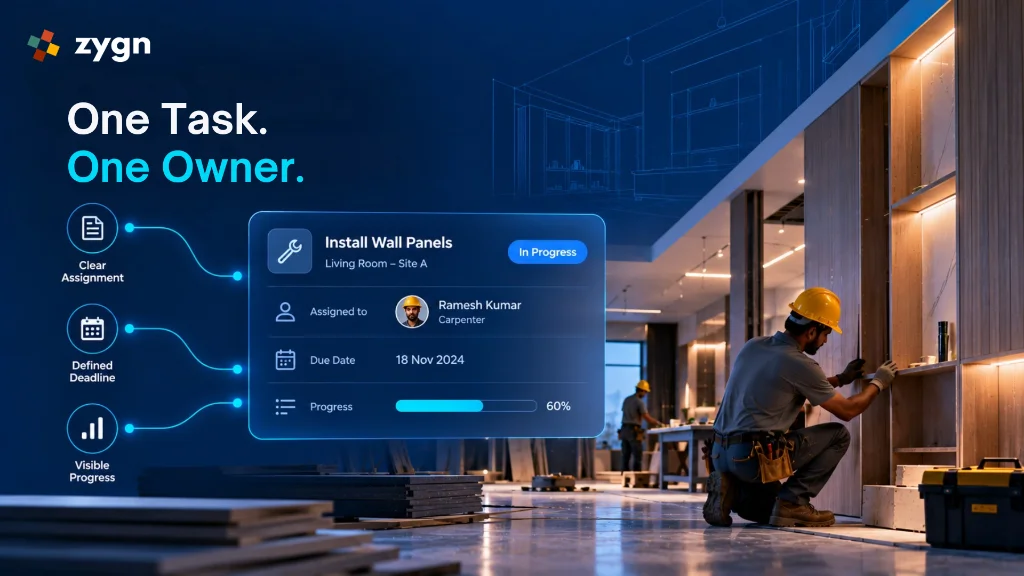
Review planned and actual progress regularly. Identify delayed tasks, clarify ownership, and assess whether dependencies will affect upcoming milestones. This helps teams address scheduling problems before they become larger execution delays.
Financial monitoring should continue throughout the project rather than being postponed until handover. Compare estimated costs with actual spending and investigate meaningful differences. For projects extending across financial quarters, regular cost reviews are especially important.
Ensure that project instructions, task responsibilities, approvals, and relevant updates remain accessible to the people responsible for execution. Reducing fragmented communication helps teams coordinate work more consistently.
Why Connected Project Management Matters for Design-Build Firms
A commercial fit-out involves more than design and site execution.
It also requires coordinated sales information, BOQ records, purchasing activities, employee responsibilities, and financial tracking.
When these processes operate through disconnected systems, project managers spend additional time gathering information and reconciling records.
A connected platform can reduce this fragmentation by keeping related business activities within a more consistent operating environment.
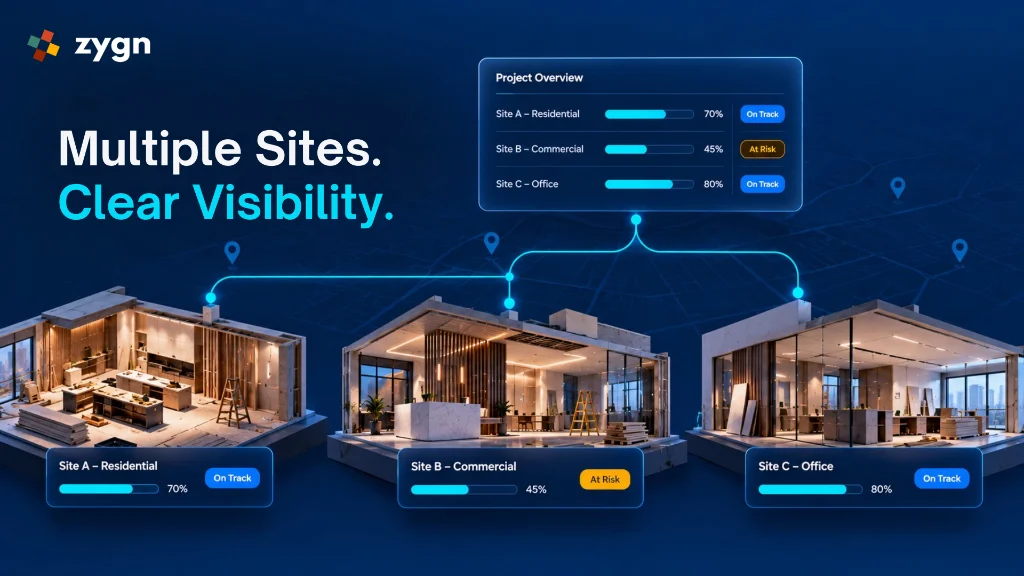
For design-build firms managing several commercial projects simultaneously, this creates an opportunity to improve coordination and operational visibility.
Instead of treating project scheduling, procurement, and financial tracking as isolated activities, businesses can manage them as connected parts of project delivery.
How ZYGN Supports Commercial Interior Project Management
ZYGN is designed for professional interior design and design-build businesses that need to manage multiple business functions in one connected system.
The platform brings together Sales CRM, Design Flow, BOQ Management, Procurement, Inventory, Site Operations, Accounts, and Human Resources.
For commercial interior firms, these connected functions support more structured coordination between planning, purchasing, execution, and business operations.
ZYGN's interior project management software helps teams organize project-related work within a centralized environment.
Its BOQ, procurement, and project management capabilities are relevant to firms managing long-duration fit-outs where multiple departments need access to consistent information.
The objective is to reduce avoidable operational confusion, improve project visibility, and support more informed management decisions.
Although software alone cannot guarantee profitability, connected processes can provide a stronger foundation for controlling project execution.
Frequently Asked Questions
Commercial fit-out project management involves planning, coordinating, and monitoring the design and execution of commercial interior spaces such as offices, retail stores, and other business premises. It includes scheduling, budgeting, procurement, vendor coordination, site execution, and handover.
Profit margins can decline because of inaccurate estimates, material cost increases, project delays, rework, uncontrolled changes, and poor coordination between teams. These additional expenses can reduce the profit originally expected from the project.
BOQ management helps businesses maintain structured records of estimated materials, quantities, and costs. Reviewing changes and comparing them with purchasing decisions supports better financial control during execution.
Gantt charts help project managers visualize activities, durations, milestones, and dependencies. They are particularly useful for long-duration projects because delays in one activity can affect several other activities and the final completion date.
Project costs should be monitored throughout execution, with reviews appropriate to the project's size and risk. Many teams benefit from weekly operational checks and monthly financial reviews, with additional reviews when significant changes occur.
Project management software can improve task visibility, coordination, and scheduling. When used alongside structured BOQ, procurement, and financial processes, it can support earlier identification of operational issues that may affect profitability.
Conclusion: Long Projects Need Continuous Control
Commercial fit-outs offer significant opportunities for interior design and design-build businesses.
However, projects extending across multiple months or financial quarters also introduce greater operational complexity.
BOQ revisions, procurement delays, shifting schedules, and disconnected financial information can gradually reduce expected profit margins.
Protecting profitability requires accurate planning, controlled purchasing, regular cost reviews, and consistent coordination between office and site teams.
For growing design-build firms, the objective is not simply to complete more commercial projects.
It is to deliver those projects with better visibility, stronger coordination, and greater financial discipline.
Manage Commercial Fit-Outs With Greater Clarity.
Bring your project management, BOQ, procurement, site operations, and accounts into one connected system with ZYGN.
Book a Free Demo →