The Challenge Isn't Communication. It's Coordination.
Most interior design businesses don't struggle because their teams aren't communicating.
In fact, communication happens constantly.
- Designers discuss revisions with clients.
- Project managers coordinate with site teams.
- Procurement teams follow up with vendors.
- Sales teams schedule consultations.
- Installations are planned and monitored.
Every day, hundreds of conversations take place across projects.
Yet despite all this communication, many firms still face the same challenges:
- Missed follow-ups
- Rescheduled site visits
- Delayed approvals
- Overlapping schedules
- Last-minute changes
- Project timeline disruptions
The issue is not a lack of information.
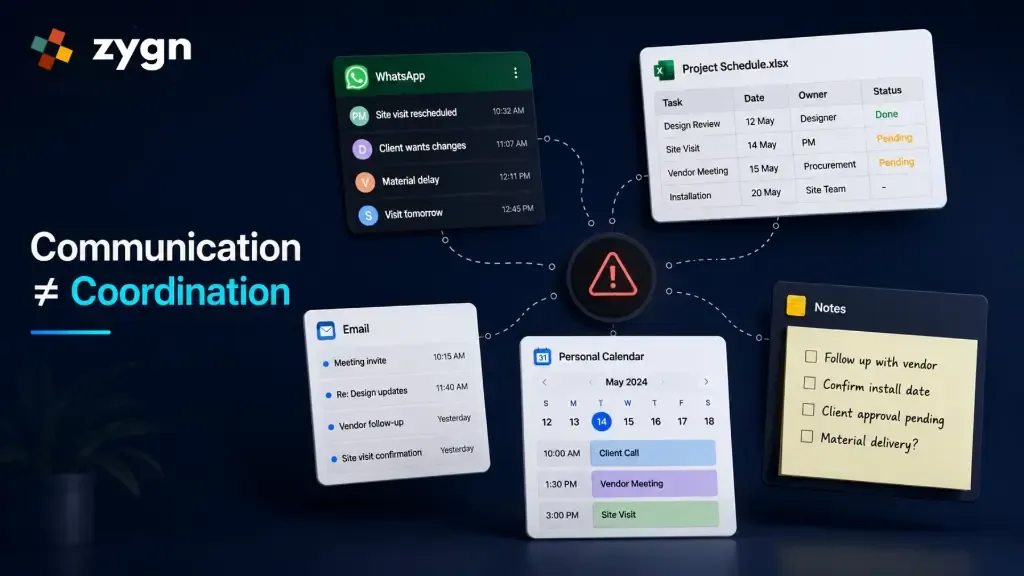
The issue is that information exists in different places.
When activities are managed across WhatsApp chats, spreadsheets, emails, and personal calendars, maintaining project coordination becomes increasingly difficult.
As businesses grow, this challenge becomes even more visible.
Because successful project delivery depends on more than communication.
It depends on keeping everyone aligned around the same timeline.
Interior Projects Depend on Multiple Moving Parts
Unlike many businesses, interior projects involve several interconnected activities that need to happen in the right sequence.
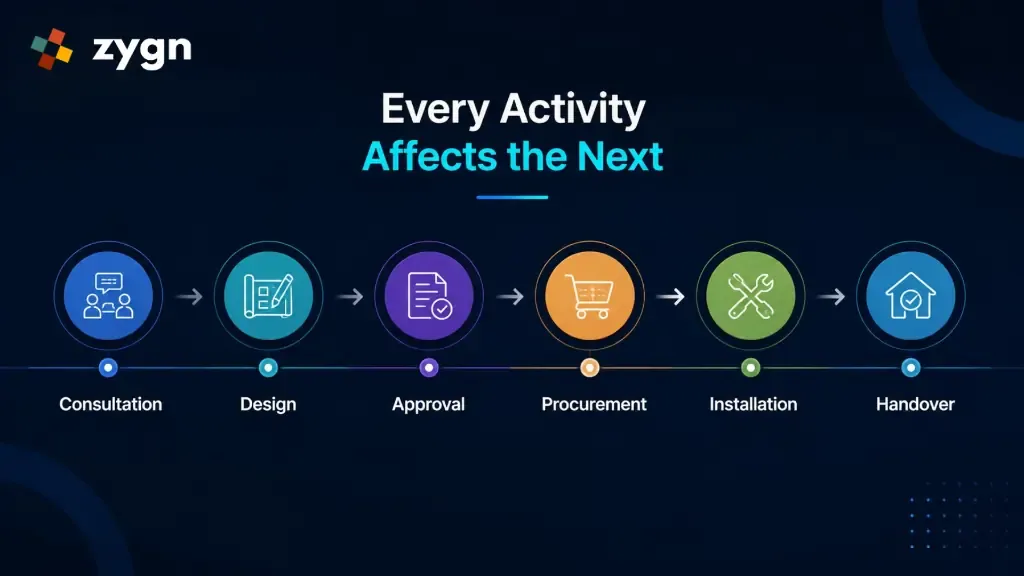
- A client consultation may lead to a design discussion.
- A design discussion may lead to revisions and approvals.
- Approvals trigger procurement activities.
- Procurement affects installation timelines.
- Installation impacts project handover.
Every activity influences the next.
This means project success depends not only on what teams are doing but also on when they are doing it.
Even a small scheduling gap can create delays across multiple stages of the project.
The more projects a business manages, the harder it becomes to maintain this level of coordination manually.
Why Project Coordination Becomes Difficult as Businesses Grow
In the early stages of a business, coordination feels manageable.
A few active projects. A small team. Limited schedules to track.
Most activities can be managed through conversations and reminders.
But growth changes everything.
More projects create:
- More meetings
- More site visits
- More design reviews
- More vendor interactions
- More project milestones
- More team dependencies
Suddenly, information becomes fragmented.
One team is looking at a spreadsheet. Another team is working from WhatsApp updates. Someone else is using a personal calendar.
Although everyone is working hard, they are not necessarily working from the same source of information.
This is often where project coordination starts breaking down.
The Cost of Poor Coordination
When teams lack a shared view of upcoming activities, businesses become reactive.
Important events are missed. Priorities become unclear. Teams spend time searching for updates instead of taking action.
Project managers spend more time coordinating than managing. Clients experience delays and uncertainty.
What appears to be a scheduling issue often becomes a business issue.
Because every missed activity has the potential to impact:
- Project timelines
- Team productivity
- Resource planning
- Client satisfaction
- Overall project delivery
As project volumes increase, these small inefficiencies begin to accumulate.
Why a Shared Calendar Matters
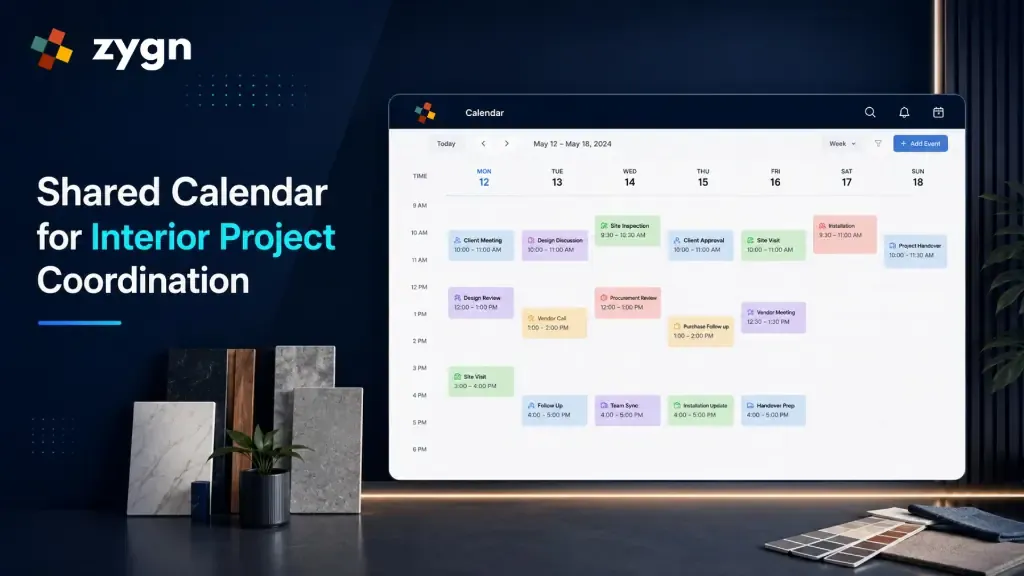
A shared calendar helps bring structure to project coordination.
Instead of activities being spread across multiple tools, teams gain a centralized view of what is happening across projects.
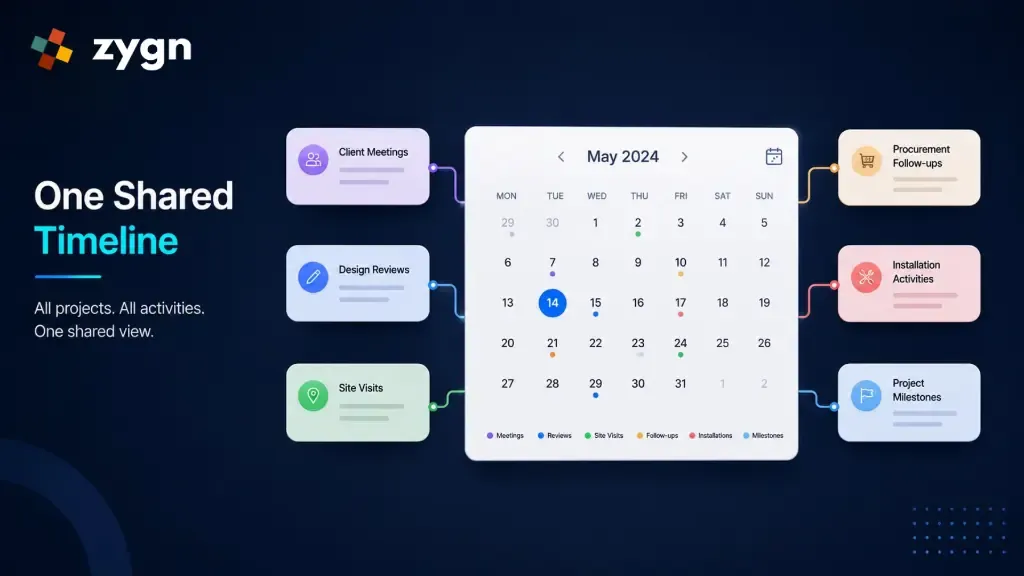
This includes:
- Client Meetings
- Design Reviews
- Site Visits
- Procurement Follow-ups
- Vendor Discussions
- Installation Activities
- Project Milestones
- Team Schedules
The value is not simply seeing dates on a calendar.
The value is understanding how activities relate to one another.
When everyone works from the same timeline, teams can plan ahead, identify conflicts early, and coordinate more effectively.
The result is greater operational clarity across the business.
Turning Planning into a Competitive Advantage
High-performing interior businesses understand that project delivery starts long before execution begins.
It starts with planning.
When teams know what activities are coming up, they can allocate resources more effectively.
When managers have visibility into schedules, they can address bottlenecks before they affect delivery.
When departments work from the same timeline, collaboration improves naturally.
This creates a more predictable operating environment where projects move forward with fewer surprises.
In a competitive industry where timelines directly influence client experience, better planning becomes a significant advantage.
How zygn Helps Interior Teams Stay Aligned
At zygn, we understand that interior businesses need more than isolated scheduling tools.
They need a connected system that helps teams work together more effectively.
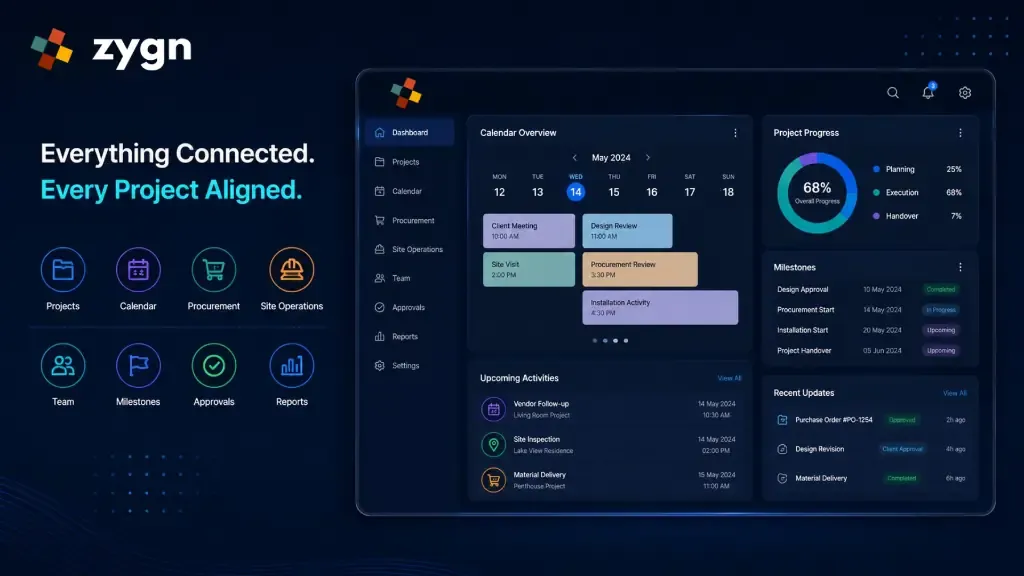
That's why the zygn Calendar is built as part of a unified Interior Operating System.
Rather than functioning as a standalone calendar, it helps teams organize and track important activities across the entire project lifecycle.
From client consultations and design discussions to site visits, procurement reviews, installation schedules, and project milestones, teams gain a centralized view of what needs attention and when.
Because the calendar is connected with projects and operations, activities are no longer managed in isolation.
This helps businesses:
- Improve project coordination
- Stay aligned across departments
- Track important milestones
- Reduce scheduling conflicts
- Improve planning accuracy
- Maintain better control over project timelines
Most importantly, it gives teams a shared view of project activities, making collaboration simpler and more effective.
Creating Clarity Across Every Project
As interior businesses grow, coordination becomes increasingly important.
Projects become larger. Teams become bigger. Operations become more complex.
The businesses that scale successfully are often the ones that create clarity before complexity becomes a problem.
A shared calendar helps achieve that clarity by giving every stakeholder visibility into upcoming activities and priorities.
Instead of relying on scattered updates and manual reminders, teams can operate from a single, connected timeline.
This creates a stronger foundation for planning, execution, and project delivery.
Conclusion
Interior project success depends on coordination.
Not just between people, but between activities, timelines, and departments.
As project volumes increase, managing schedules across disconnected tools creates complexity that impacts planning and execution.
A shared calendar helps bring those activities together into one view, allowing teams to stay aligned, improve collaboration, and manage projects more effectively.
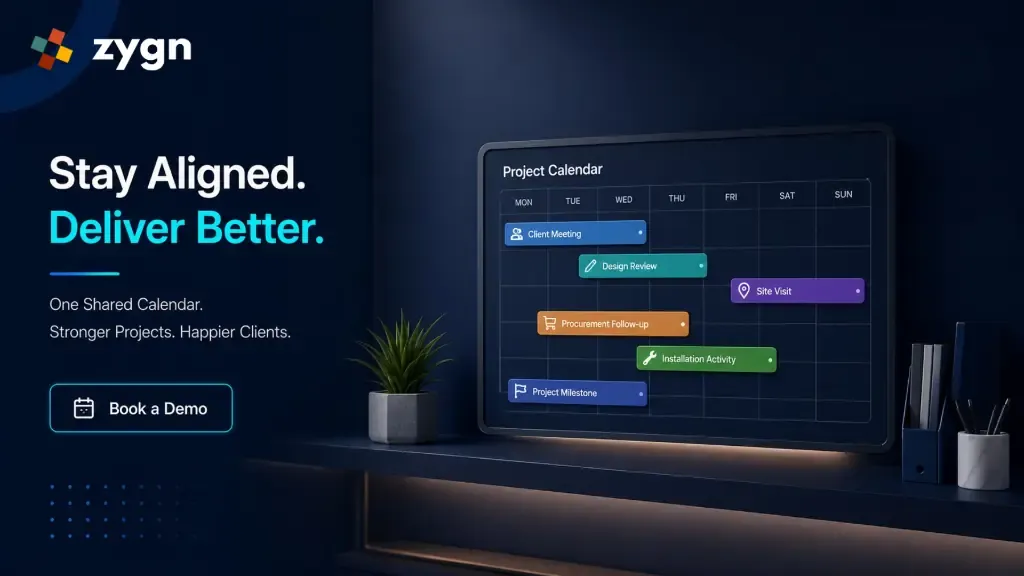
Because successful project delivery is not only about completing work. It is about ensuring the right work happens at the right time.
Ready to Improve Project Coordination Across Your Team?
Discover how zygn helps interior businesses connect project activities, team schedules, procurement workflows, and execution timelines through one unified Interior Operating System. Book a demo today and see how zygn helps your team stay aligned from planning to project handover.