Your Team Isn't Losing Time Because They're Busy. They're Losing Time Because They're Managing Excel.
A project manager is updating a procurement sheet. A designer is checking the latest BOQ version. A site supervisor is calling to confirm whether materials have been approved. A business owner is asking for a project status update.
Everyone is busy. Yet nobody has a complete picture of what's happening.
This is the reality inside many growing interior design businesses.
What begins as a simple spreadsheet to track projects, gradually turns into dozens of files, multiple versions, manual updates, and endless follow-ups. Teams spend valuable hours maintaining information instead of acting on it.
The challenge isn't Excel itself.
The challenge is that interior projects have evolved, while spreadsheets have remained the same.
As project volumes increase, clients become more demanding, and teams become larger, relying on Excel often creates hidden costs that aren't immediately visible but are felt every day through delays, miscommunication, and operational inefficiencies.
Why Interior Design Firms Still Depend on Excel
For years, spreadsheets have been the go-to tool for managing operations. They're familiar, flexible, and available to everyone.
Many interior firms use Excel to:
- Track project progress
- Manage BOQs
- Monitor procurement
- Maintain budgets
- Store client information
- Generate reports
In the early stages of a business, spreadsheets work well. But the moment multiple projects, departments, vendors, and stakeholders become involved, managing everything through spreadsheets becomes increasingly difficult.
The problem isn't using Excel. The problem is expecting Excel to function like a project management system.
When Spreadsheets Become an Operational Bottleneck
Most businesses don't notice the limitations immediately. The issues appear gradually as project complexity increases.
- A procurement update doesn't reach the execution team.
- A revised BOQ exists in a different file.
- A vendor follows an outdated version.
- A project update gets delayed because information needs to be consolidated manually.
Individually, these situations seem minor. Collectively, they create friction across the business. And what starts as a small inconvenience eventually becomes a daily operational challenge.
The Hidden Costs Most Interior Businesses Overlook
Time Lost to Administration
Project managers update status reports. Teams consolidate information from different sources. Business owners request progress updates. Hours that could be spent on execution are often spent updating documents. The larger the business grows, the more time is consumed by administration.
Decisions Are Made with Yesterday's Information
Excel only reflects the information that has already been entered. By the time reports are updated, project realities may have changed:
- A delayed material delivery.
- A pending approval.
- A revised project timeline.
Without real-time visibility, decision-making becomes slower and less reliable.
Information Exists Everywhere
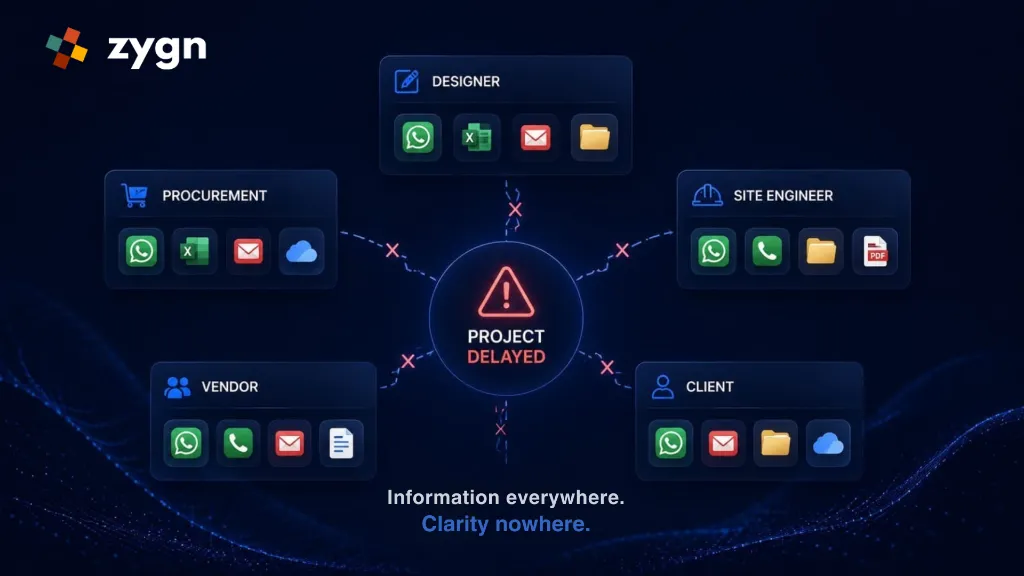
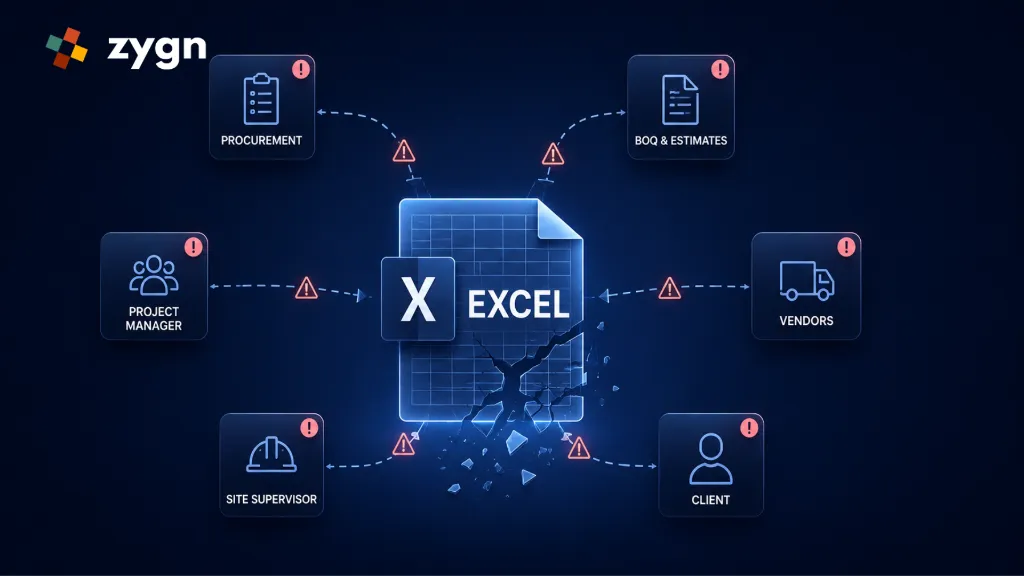
The spreadsheet may contain project data. But the actual project conversation lives elsewhere: WhatsApp groups, emails, vendor calls, site discussions, and shared folders.
This creates information silos where critical updates remain disconnected from project tracking. As a result, teams spend more time searching for information than using it.
Collaboration Becomes Increasingly Difficult
Interior projects require constant coordination between designers, procurement teams, project managers, site supervisors, vendors, and clients. Spreadsheets were designed for data management, not team collaboration. As more people become involved, maintaining alignment becomes significantly harder.
Nobody Is Sure Which Version Is Correct
- A revised BOQ exists in a different file.
- Procurement teams work from outdated information.
- Designers reference an older version of the plan.
- Site teams follow specifications that are no longer current.
Before long, different teams are working from different versions of the same information leading to confusion, delays, and costly rework.
The Real Business Impact
The hidden cost of spreadsheets isn't measured in software expenses. It's measured in operational inefficiencies. These inefficiencies often appear as:
- Delayed project updates
- Missed follow-ups
- Procurement bottlenecks
- Communication gaps
- Reduced accountability
- Slower decision-making
- Delivery delays
Over time, these challenges affect client experience, team productivity, and business profitability. What begins as a Spreadsheet problem eventually becomes a Business Growth problem.
What Growing Interior Businesses Need Instead
As businesses scale, visibility becomes more important than data entry. Teams need a connected system where information flows automatically across departments. A modern interior business requires a platform that can:
- Track project progress in real time
- Manage BOQs and procurement
- Coordinate teams and vendors
- Centralize communication
- Monitor budgets and milestones
- Generate instant reports
- Provide complete project visibility
Most importantly, everyone should be working from the same source of truth.
How zygn Helps Interior Firms Move Beyond Spreadsheets
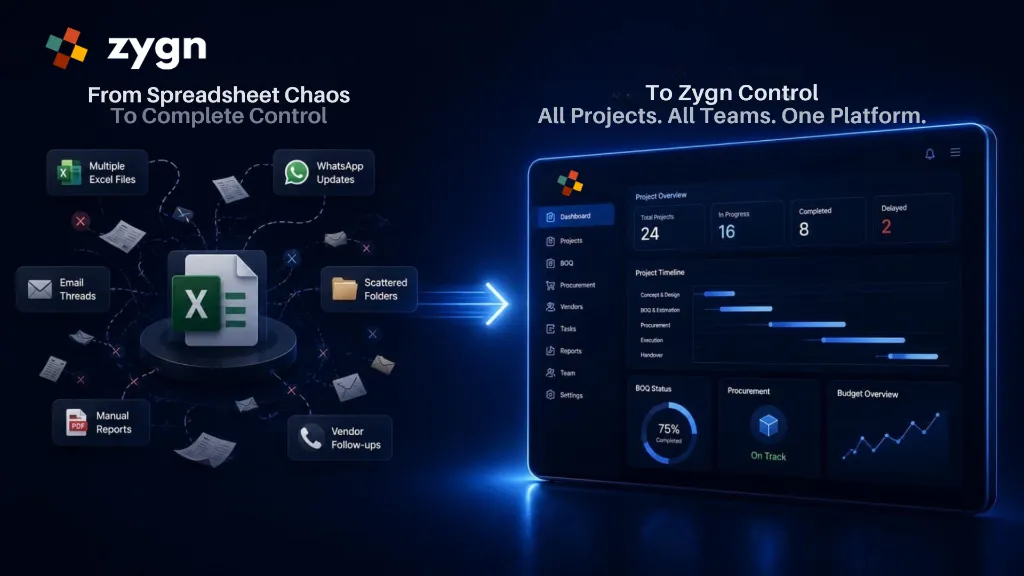
zygn is built specifically for interior design businesses that have outgrown manual project tracking. Instead of managing projects across spreadsheets, chats, and disconnected tools, zygn brings operations into one connected platform.
With zygn, teams can:
- Track project progress in real time
- Manage BOQs efficiently
- Coordinate procurement and vendors
- Monitor project milestones
- Centralize communication and documentation
- Access live reports and insights
- Improve collaboration across teams
With everyone working from the same platform, information stays connected, accessible, and always up to date. The result is greater visibility, stronger accountability, and more efficient project execution.
From Spreadsheet Management to Business Management
The goal isn't to eliminate Excel. The goal is to eliminate the operational friction that comes with relying on spreadsheets as a primary project management system.
As interior businesses grow, success depends on visibility, coordination, and execution. The firms that scale successfully are not the ones maintaining the best spreadsheets. They are the ones building the best systems.
Final Thoughts
Excel sheets have helped businesses stay organized for decades. But modern interior projects require more than static files and manual updates. As teams, projects, and client expectations grow, spreadsheets often become a hidden barrier to efficiency. The businesses that continue to scale are those that move beyond manual tracking and embrace connected workflows built for real-time project management. The right systems don't just help you manage projects. They help you scale your business with confidence.
Ready to Move Beyond Spreadsheets?
Stop spending hours updating files, chasing project information and managing disconnected processes.
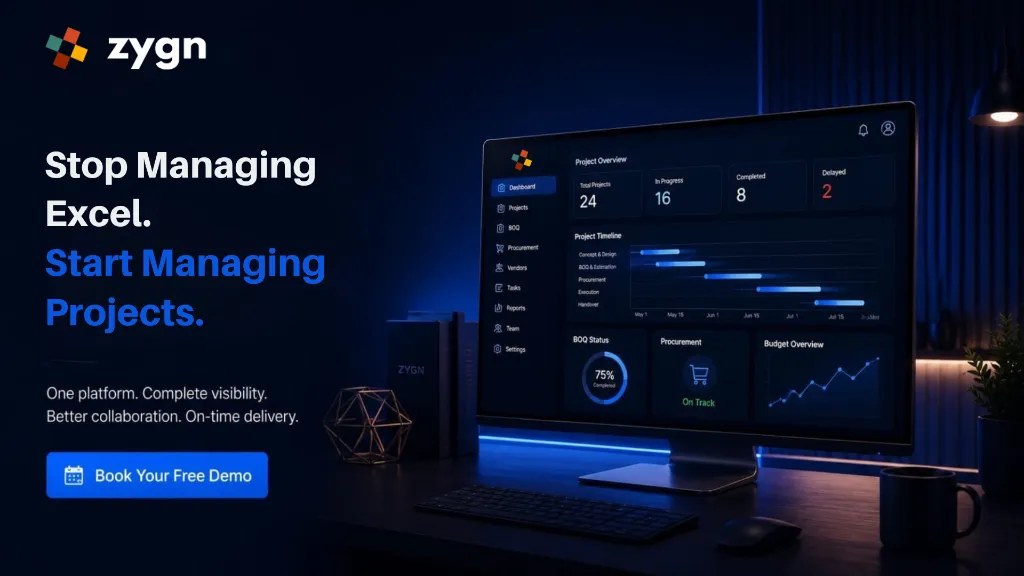
Book Your Free Demo and see how zygn helps your team gain complete visibility, improve collaboration, and deliver projects with confidence.