Technology has transformed the way interior design firms operate. Today, businesses have access to specialized tools for every function, from lead management and project tracking to procurement, communication, accounting, and team collaboration. On paper, having dedicated software for each task sounds like the perfect way to improve efficiency.
However, many interior design businesses are discovering a new challenge as they grow: managing too many disconnected software tools.
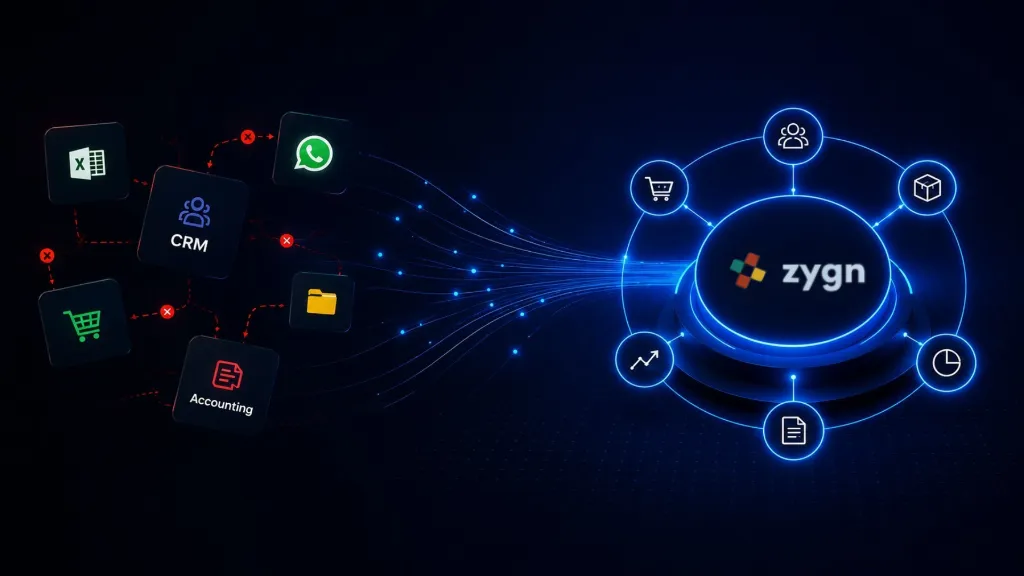
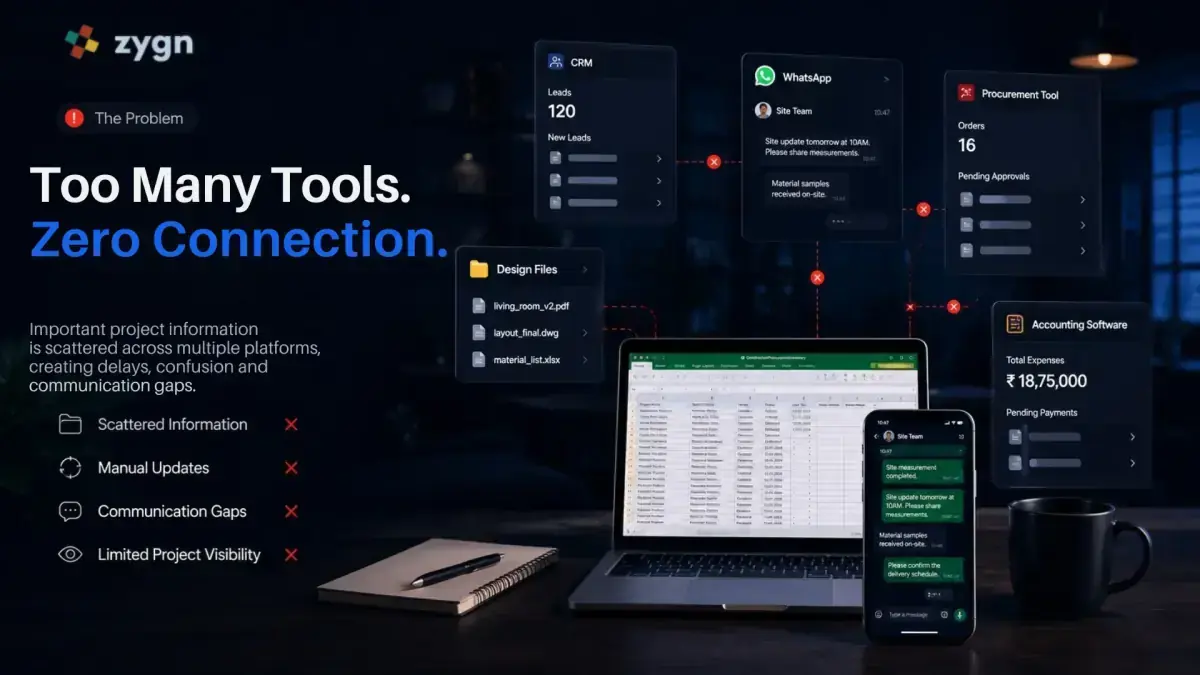
What starts as a collection of useful applications often turns into a fragmented system where information is spread across multiple platforms. Project updates live in spreadsheets, procurement details are stored elsewhere, client conversations happen on WhatsApp, and financial records sit in separate accounting software. Teams spend more time switching between systems and searching for information than focusing on project execution.
The result is slower decision-making, communication gaps, reduced productivity, and limited project visibility. For many firms, the challenge is no longer finding software, it is managing too many tools that fail to work together.
The Growing Digital Challenge for Interior Design Firms
Modern interior businesses are far more complex than they were a few years ago.
Today's firms manage:
- Lead generation and sales
- Client onboarding
- Design approvals
- BOQ creation
- Procurement activities
- Vendor coordination
- Inventory tracking
- Site execution
- Team management
- Financial operations
As businesses expand, they naturally adopt new tools to solve specific challenges. While these tools may improve individual processes, they often create disconnected workflows that make operations harder to manage.
Instead of creating efficiency, technology can sometimes create operational silos that limit visibility across projects.
Why Most Interior Businesses End Up Managing Multiple Platforms
Most interior firms don't intentionally create disconnected systems. The process usually happens gradually:
- A CRM is introduced to manage leads.
- Excel sheets are used to track projects.
- WhatsApp becomes the preferred communication platform.
- Procurement is managed through separate software.
- Accounts and payroll operate independently.
Over time, businesses find themselves relying on:
- CRM software for lead management
- Excel sheets for project tracking
- WhatsApp for communication
- Procurement software for vendor management
- Inventory tools for stock tracking
- Accounting software for financial management
- HR platforms for payroll and workforce management
While each system serves a purpose, very few communicate with one another. As a result, information becomes fragmented across departments.
The Hidden Cost of Disconnected Systems
The biggest challenge isn't the number of tools being used. The challenge is that each tool stores information separately.
- Communication Gaps: Important project information often gets lost between teams. Client approvals may happen on WhatsApp. Procurement updates may be recorded elsewhere. Design revisions may be stored in different files. Without centralized communication, teams operate with incomplete information.
- Duplicate Data Entry: The same information is often entered multiple times across different systems. This increases administrative work and creates opportunities for errors.
- Delayed Decision-Making: Managers spend valuable time gathering information before taking action. Instead of making decisions immediately, they first need to understand where information exists.
- Reduced Accountability: When information is spread across multiple platforms, it becomes difficult to identify ownership and responsibility.
- Lack of Project Visibility: Leadership teams struggle to gain a complete view of project status, making proactive management difficult.
How Multiple Software Tools Affect Project Delivery
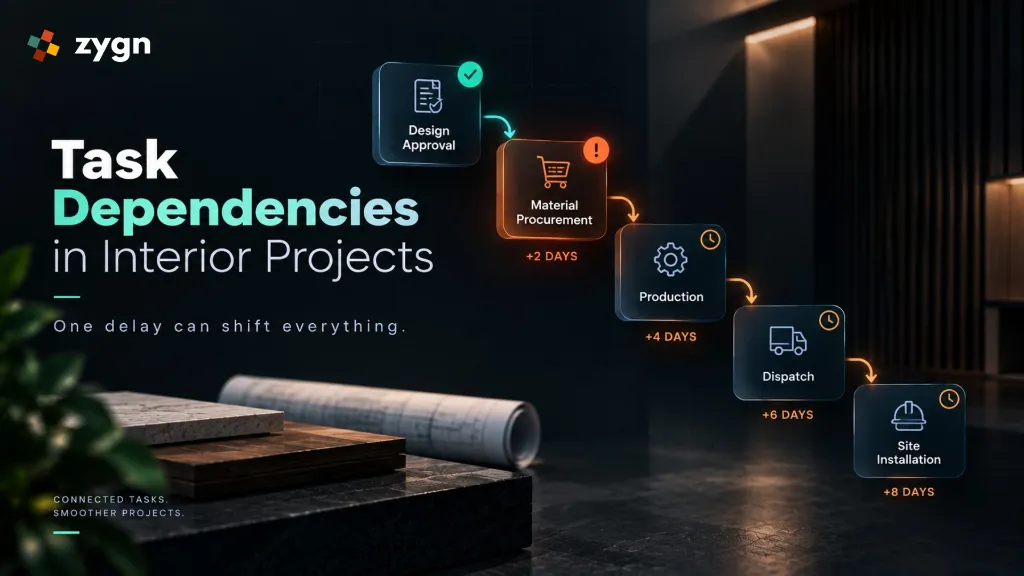
Interior projects involve constant coordination between designers, project managers, procurement teams, vendors, site supervisors, finance teams, and clients. When information is fragmented, even minor issues can create major delays.
For example:
- A procurement team may not receive updated design specifications.
- A vendor may miss an approval update.
- A site team may wait for materials due to inventory confusion.
- A client may receive inconsistent project updates.
Over time, these challenges impact project timelines, team productivity, operational efficiency, client satisfaction, and overall business profitability.
Why Excel Sheets and WhatsApp Are No Longer Enough
For years, spreadsheets and messaging apps have helped businesses manage operations. However, they were never designed to handle complex interior project workflows. Excel sheets can store information, but they cannot provide real-time project visibility. WhatsApp enables fast communication, but important updates often become buried within conversations.
As businesses scale, relying heavily on these tools creates:
- Information silos
- Lost communication history
- Manual reporting
- Version control issues
- Limited operational visibility
What works for five projects rarely works for fifty.
Signs Your Interior Business Has Outgrown Multiple Tools
If three or more of these sound familiar, your workflow may be limiting growth:
- Teams constantly ask for project updates.
- Information is spread across multiple platforms.
- Project reports require manual effort.
- Procurement delays are becoming common.
- Client communication is difficult to track.
- Teams rely heavily on WhatsApp for critical updates.
- Leadership lacks real-time visibility.
- Team members spend more time coordinating than executing.
If these challenges sound familiar, it may be time to rethink how your business manages operations.
The Cost of Inefficient Workflows
Inefficient workflows rarely appear as a single major problem. Instead, they create small daily inefficiencies that accumulate over time. Teams lose hours every week searching for information, following up on updates, preparing manual reports, coordinating between departments, and tracking procurement activities.
Across multiple projects, these lost hours translate into delayed timelines, increased costs, and reduced profitability. The true cost of disconnected systems is often hidden until businesses begin to scale.
What a Connected Interior Workflow Looks Like
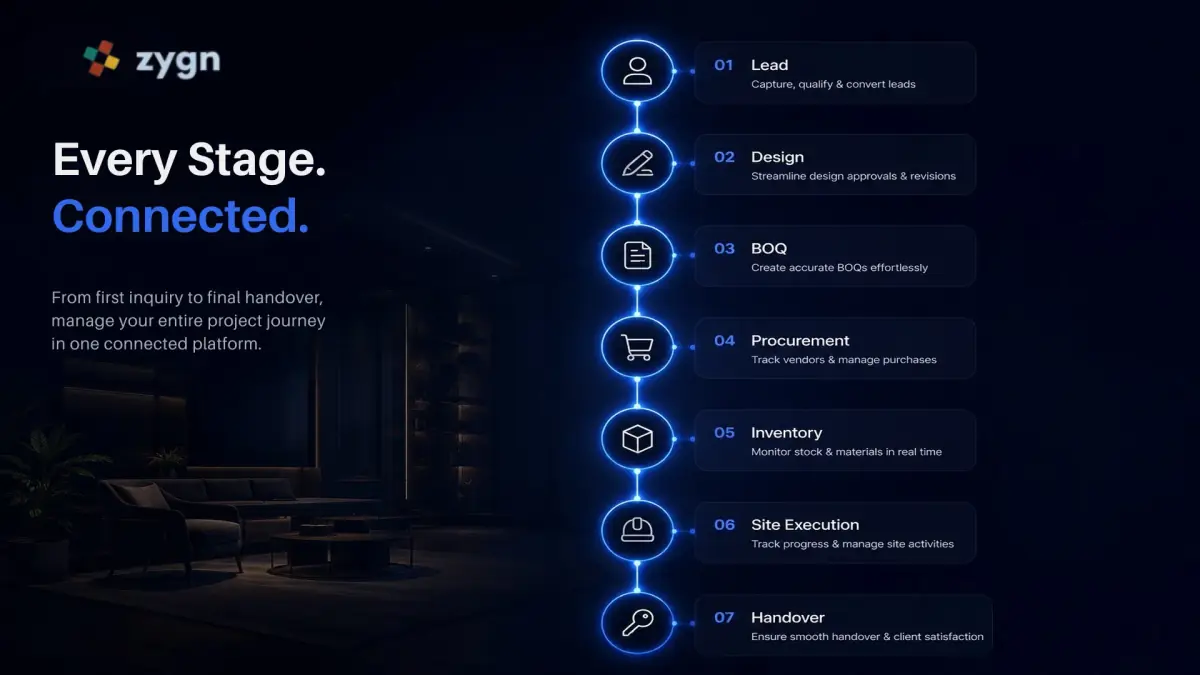
A connected workflow eliminates information silos by creating a single source of truth across the organization. In a connected system:
- Leads flow directly into projects.
- Design approvals are tracked centrally.
- BOQs connect with procurement.
- Inventory updates happen in real time.
- Site execution is visible instantly.
- Communication remains organized.
- Reports are generated automatically.
Instead of searching for information, teams can access everything they need from one platform.
How zygn Unifies Interior Business Management
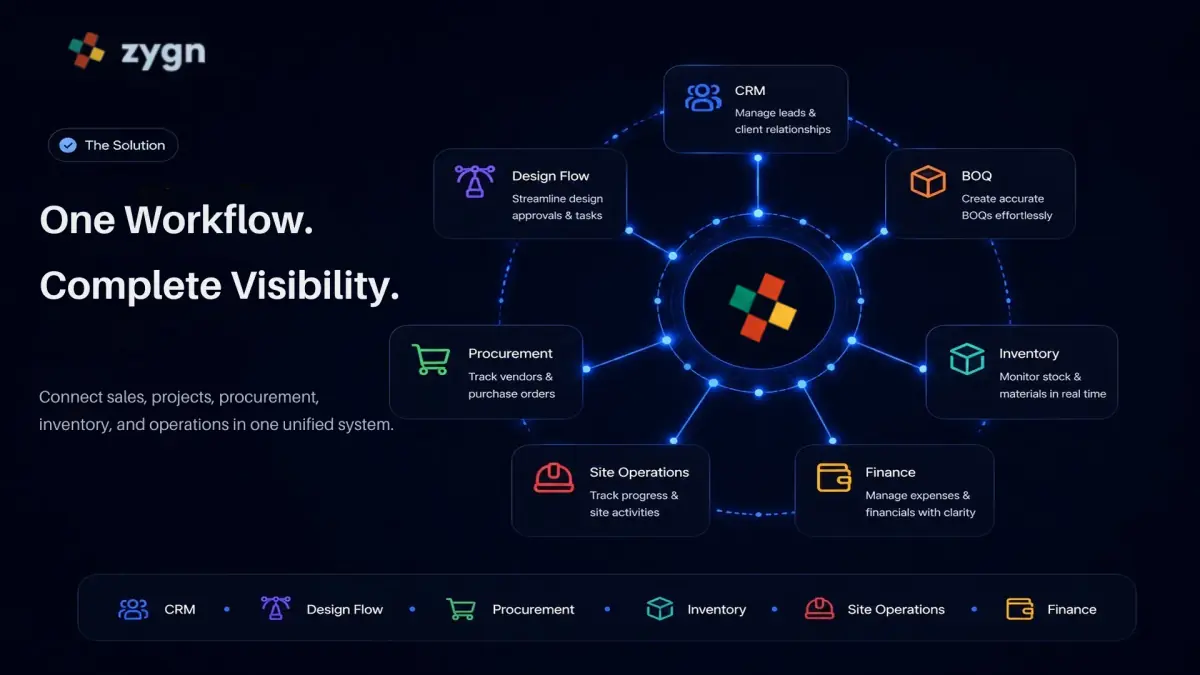
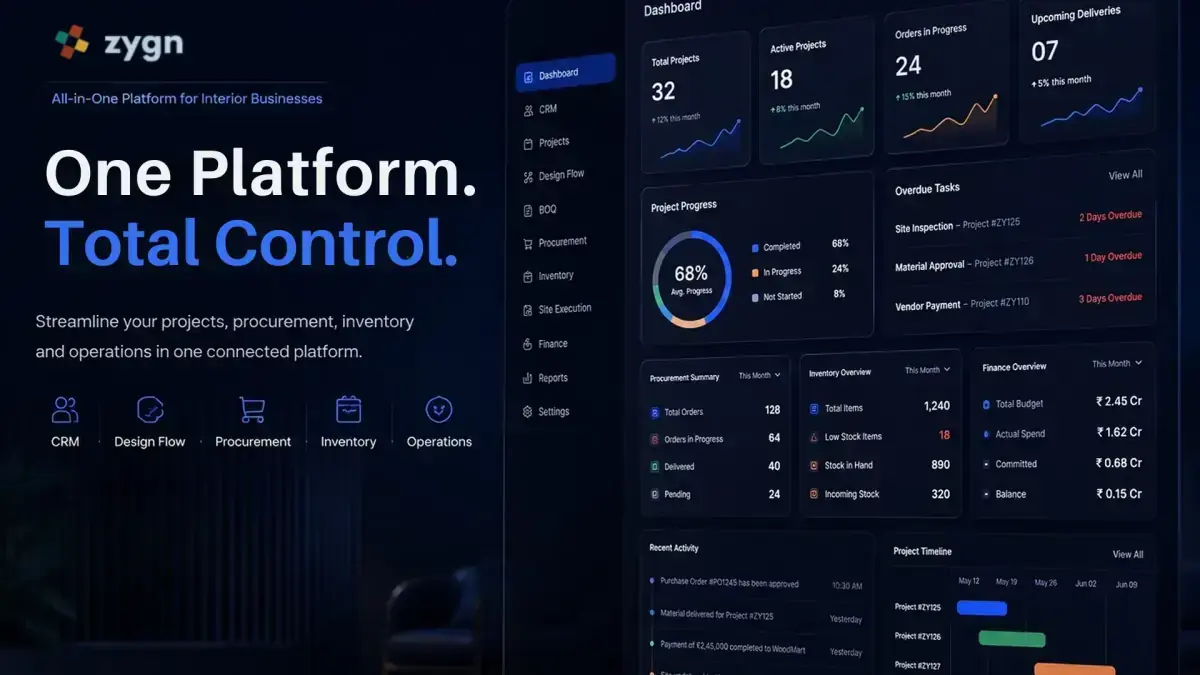
Unlike generic project management software, zygn is built specifically for interior design businesses. It connects every major operational function into one unified ecosystem:
- CRM & Lead Management: Track leads, manage inquiries, monitor sales pipelines, and improve client engagement.
- Design Flow Management: Manage design approvals, revisions, milestones, and workflows from a centralized platform.
- BOQ Management: Create, manage, and monitor BOQs with greater accuracy and visibility.
- Procurement Management: Coordinate vendors, approvals, purchases, and material tracking efficiently.
- Inventory Management: Track stock movement, material availability, and inventory levels in real time.
- Onsite Operations: Monitor project progress, site execution, and team activities with complete visibility.
- Accounts & Finance: Manage expenses, reporting, and financial operations from one connected platform.
- HR & Workforce Management: Handle payroll, employee records, attendance, and workforce operations efficiently.
- Conversation Management: Centralize communication and maintain complete visibility across teams and projects.
By connecting every stage of the business, zygn eliminates workflow fragmentation and helps firms operate more efficiently.
Benefits of Using a Unified Platform
Businesses that move to a connected workflow experience:
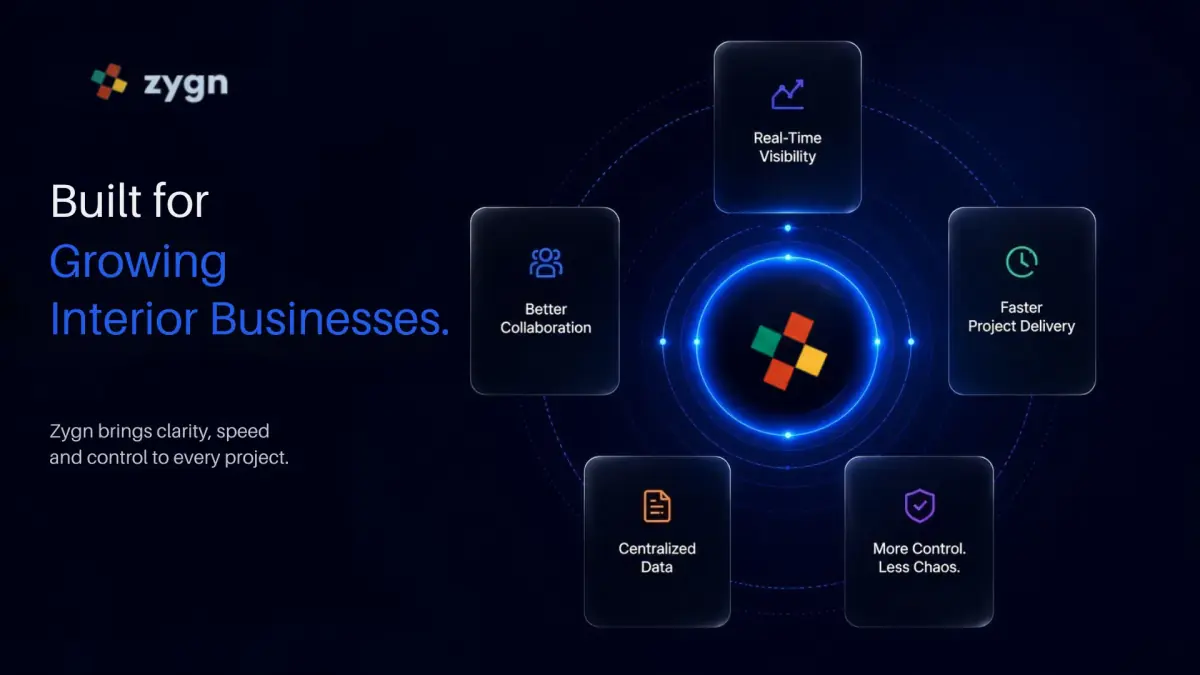
- Faster project delivery
- Better team collaboration
- Improved communication
- Reduced manual work
- Enhanced project visibility
- Greater accountability
- Increased operational efficiency
- Better resource utilization
- Improved profitability
- Stronger scalability
Most importantly, teams spend less time managing software and more time delivering successful projects.
Frequently Asked Questions
Why do interior design firms use multiple software tools?
Most firms adopt software gradually to solve specific challenges. Over time, this creates disconnected systems that store information independently.
What are the disadvantages of disconnected systems?
Disconnected systems create communication gaps, duplicate work, reduced visibility, and delayed decision-making.
Can spreadsheets manage large interior projects effectively?
Spreadsheets work for small operations but become increasingly difficult to manage as projects and teams grow.
Why is procurement visibility important?
Procurement directly impacts project timelines. Without visibility into approvals, vendors, and materials, delays become more common.
What is a unified workflow?
A unified workflow connects all departments and processes into one platform, creating a single source of truth.
Can one platform replace multiple tools?
Yes. Modern interior business platforms can combine CRM, project management, procurement, inventory, HR, and reporting into one system.
How does zygn improve project visibility?
zygn centralizes information across departments, allowing teams to track projects, procurement, inventory, and operations in real time.
How does a connected workflow improve profitability?
By reducing manual work, improving efficiency, minimizing delays, and increasing accountability, businesses can operate more profitably.
Key Takeaways
- Multiple software tools often create disconnected workflows.
- Fragmented information reduces project visibility.
- Communication gaps lead to delays and inefficiencies.
- Excel sheets and WhatsApp alone cannot support growing businesses.
- Unified workflows improve collaboration and accountability.
- zygn connects CRM, Design Flow, BOQs, Procurement, Inventory, Operations, HR, and Reporting into one platform.
Conclusion
The challenge facing interior design businesses today is not a lack of technology, it is managing too many disconnected tools. While individual software tools may solve specific problems, they often create new challenges when they fail to work together. As projects become larger and operations become more complex, fragmented workflows lead to communication gaps, reduced visibility, manual effort, and project delays.
The future of interior project management lies in connected workflows that unify every aspect of the business. Firms that embrace this approach gain better control, stronger collaboration, improved efficiency, and greater confidence in project delivery. Instead of spending valuable time managing systems, teams can focus on what truly matters in delivering exceptional interior projects and growing their business.