India's interior design market is growing rapidly, but more projects don't always mean higher profits. Inaccurate estimates, procurement overruns, project delays, and disconnected business systems can quietly reduce studio margins. For interior design businesses, sustainable growth depends not only on winning more projects but also on managing every project efficiently.
India's Interior Design Industry Is Growing Rapidly
India's interior design industry is experiencing significant growth.
According to Mordor Intelligence, the Indian interior design market is projected to grow from USD 35.48 billion in 2026 to USD 65.01 billion by 2031, representing a compound annual growth rate of approximately 12.87%.
Increasing urbanization, demand for customized interiors, and expanding residential and commercial development are creating new opportunities for interior design studios.
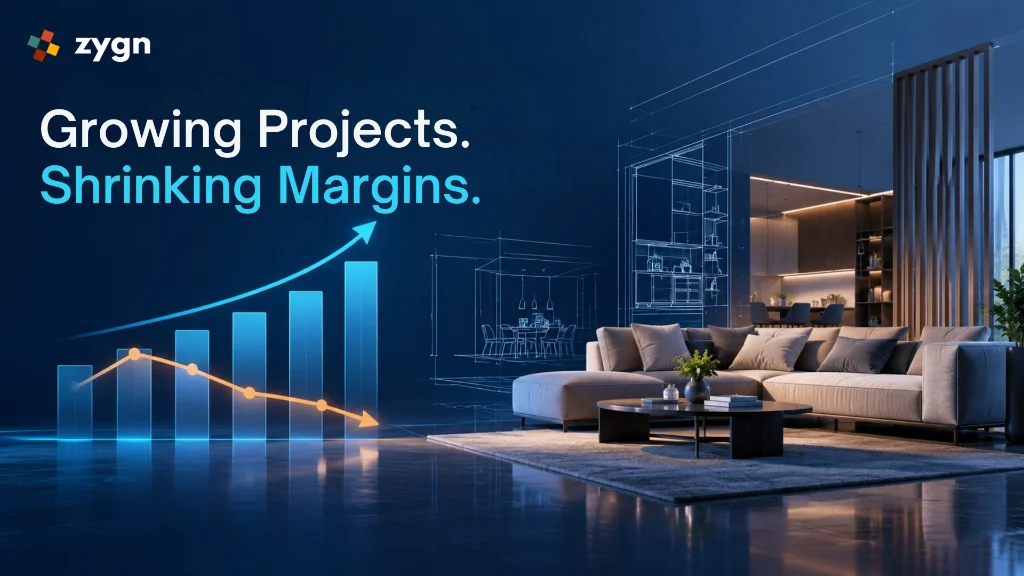
However, a growing market does not guarantee that every studio will become more profitable.
As businesses take on more projects, they also face greater pressure to manage materials, vendors, employees, timelines, and client expectations.
The real challenge is no longer simply securing projects. It is delivering them without allowing operational costs to consume the expected profit.
Why More Projects Don't Always Mean More Profit
For many interior design studios, business growth means managing more clients, larger project budgets, and multiple execution teams.
But increasing project volume without improving internal processes can create additional complexity.
Sales teams may track enquiries in one system, designers maintain separate BOQ files, procurement teams coordinate through calls and messages, and accounts teams manage invoices independently.
Each team may be working efficiently on its own, yet the business still lacks a complete view of project costs and progress.
This is where an all-in-one interior business management platform can become valuable by connecting information that would otherwise remain scattered across departments.
Without connected workflows, revenue can increase while profitability remains under pressure.
The Hidden Operational Costs Reducing Studio Margins
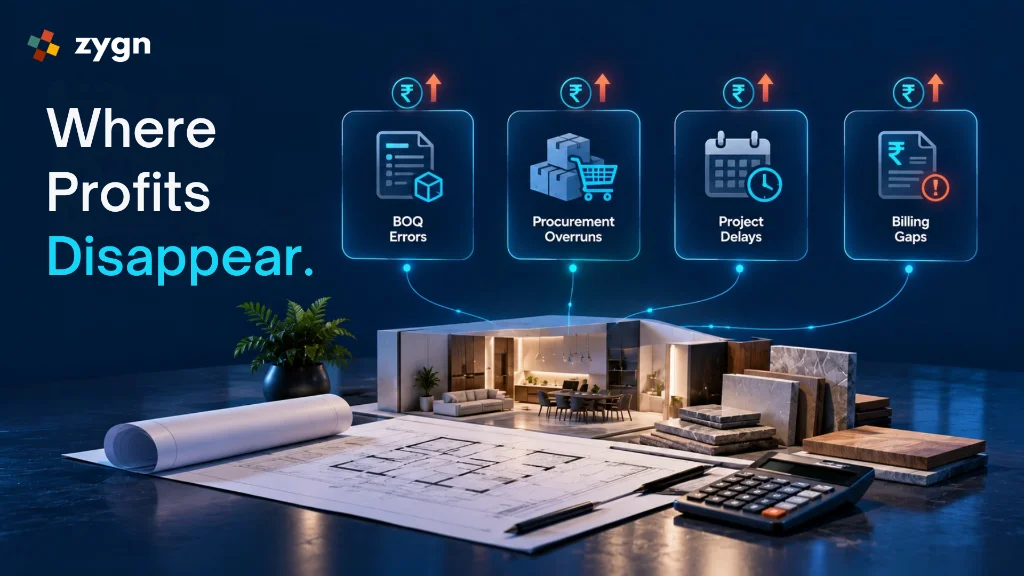
A Bill of Quantities (BOQ) is essential for estimating project materials, quantities, and costs.
When estimates are prepared manually or maintained across different spreadsheets, important changes may not be reflected consistently.
Even small differences between estimated and actual quantities can affect profitability.
A project that appears profitable during quotation may deliver a much smaller margin once actual purchases and execution costs are considered.
Material purchasing is a significant expense in interior projects.
Last-minute orders, supplier price changes, duplicate purchases, and poor coordination between project and procurement teams can increase spending.
Without visibility into purchase requests, approvals, orders, and project-linked costs, these overruns may become apparent only after much of the budget has already been spent.
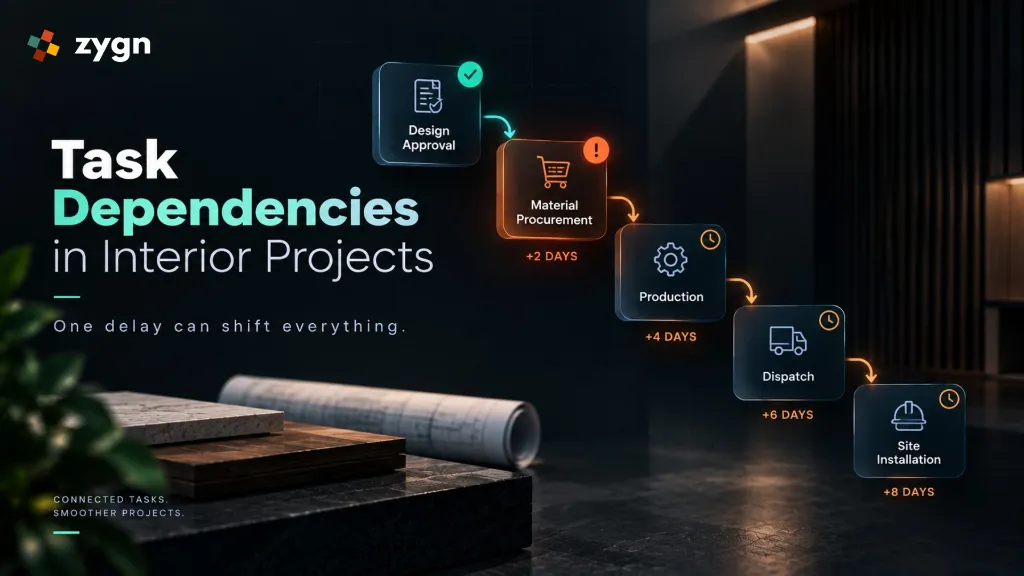
Interior projects depend on several connected activities.
Design approvals influence procurement. Material availability affects execution. Site readiness determines when installation can begin.
A delay in one activity can create additional labour costs, rescheduling expenses, and extended project timelines.
Rework caused by outdated drawings or unclear client approvals adds further pressure to project margins.
A project may be progressing on site while its financial records tell a different story.
When billing, purchases, and project expenses are maintained separately, managers may struggle to understand the actual financial position of ongoing work.
Delayed invoicing and missed payment follow-ups can also create cash-flow pressure, even when a project is expected to be profitable.
Project managers often spend considerable time requesting updates, checking spreadsheets, contacting vendors, and following up with site teams.
These activities are necessary, but repeated manual coordination reduces the time available for planning, quality control, and client service.
As project volume increases, the administrative workload can grow faster than the team's capacity.
Disconnected Systems Create Hidden Costs
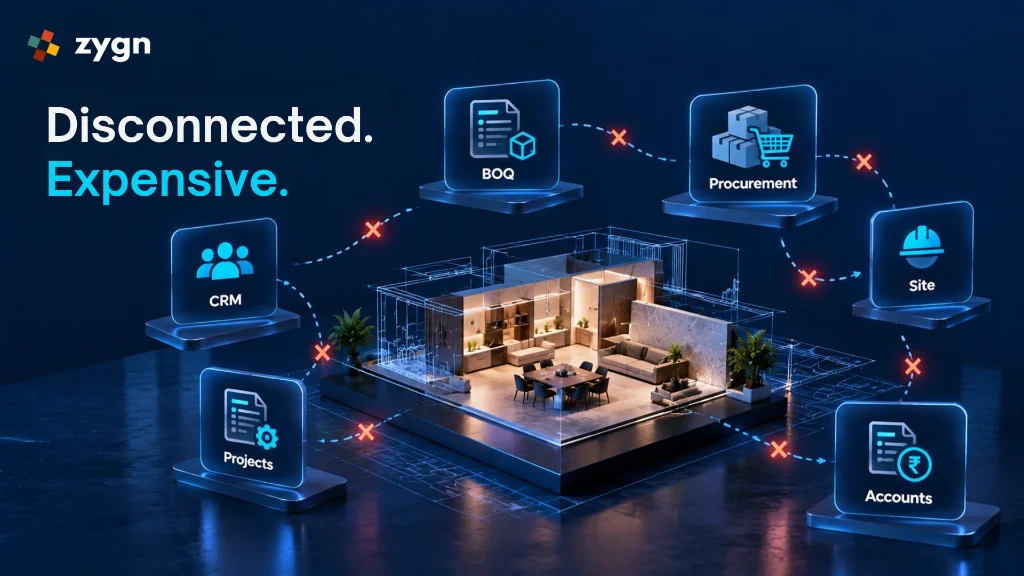
One of the biggest operational challenges for growing interior studios is that essential business information lives in different places.
A lead may begin in a CRM, become a project in a separate tracker, move into a BOQ spreadsheet, and eventually generate purchases and invoices in other systems.
When these records are not connected, teams must manually transfer information between departments.
This creates opportunities for outdated data, missed updates, and decisions based on incomplete information.
An ERP for interior design helps address this fragmentation by centralizing core business processes such as project management, BOQ, procurement, HR, and accounting.
The objective is not simply to replace spreadsheets. It is to give teams a consistent source of information throughout the project lifecycle.
Revenue vs. Profit: A Simple Interior Project Example
Consider a hypothetical interior project with a contract value of ₹20 lakh.
| Project Financials | Amount |
|---|---|
| Project Revenue | ₹20,00,000 |
| Estimated Project Cost | ₹16,00,000 |
| Expected Profit (20% Margin) | ₹4,00,000 |
| Additional Procurement Cost | + ₹80,000 |
| Delay and Rework Cost | + ₹70,000 |
| Actual Profit (12.5% Margin) | ₹2,50,000 |
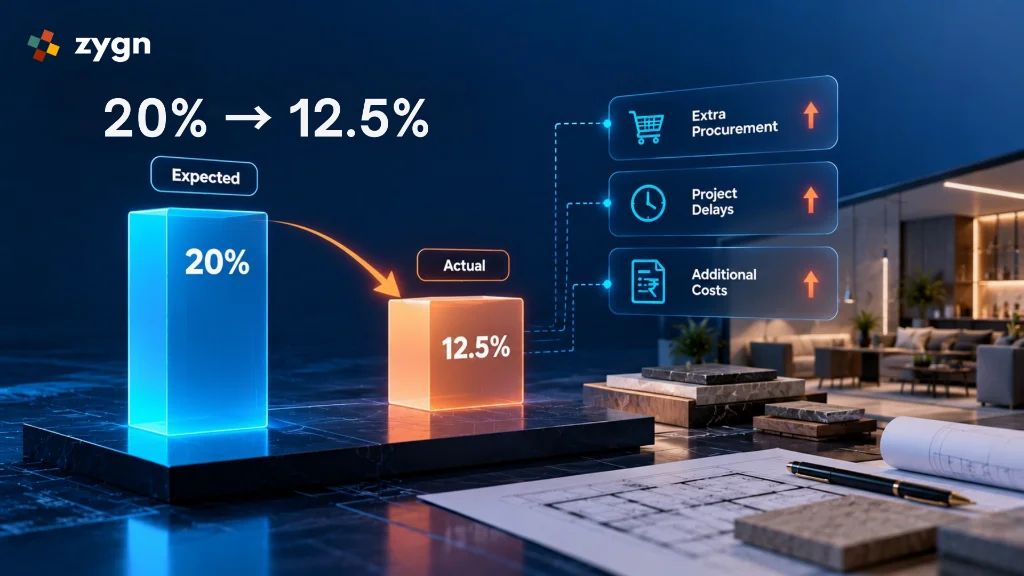
This is an illustrative example, not an industry-average profitability figure.
The project still generates revenue, but additional costs reduce the expected profit substantially.
This is why project profitability must be reviewed throughout execution rather than only after completion.
How Interior Design Studios Can Protect Their Profit Margins
Improving profitability does not always require increasing project prices or reducing design quality.
Often, the opportunity lies in improving operational control.
Maintain clear BOQ records and review changes before they affect purchasing or execution.
Keep purchase requests, approvals, and orders associated with the relevant project so costs are easier to trace.
Make responsibilities, tasks, and project updates visible to the teams involved.
Review project-related expenses, invoices, and payment status regularly instead of waiting until handover.
Keep important project information organized so teams can find the latest details without repeatedly searching through messages and files.
Using connected interior project management software can support these practices by bringing project activities and related business information into a more structured workflow.
Where ZYGN Fits Into a Growing Interior Business
ZYGN is designed for interior design and design-build businesses that need to manage their operations in one connected environment.
Rather than maintaining separate tools for different departments, ZYGN brings together Sales CRM, Design Flow, BOQ Management, Procurement, Inventory, Site Operations, Accounts, and Human Resources.
This connected approach helps teams maintain clearer records, coordinate responsibilities, and access information across different stages of an interior project.
For growing studios, the goal is straightforward: reduce avoidable operational confusion and improve visibility into the activities that influence project delivery and profitability.
ZYGN supports better business control, although software alone cannot guarantee higher profit margins.
Frequently Asked Questions
Interior design profit margins can be affected by inaccurate project estimates, material cost increases, delays, rework, and inefficient coordination. These costs can reduce profitability even when a studio has a healthy number of projects.
No. Higher revenue does not automatically produce higher profits. If procurement, labour, rework, and administrative costs rise faster than revenue, a studio's profit margin can decline.
Studios can improve cost control by maintaining accurate BOQs, reviewing purchase approvals, tracking project expenses, and identifying delays early. Consistent project records help managers make better decisions before overruns become substantial.
ERP software helps centralize important business information such as projects, procurement, inventory, accounting, and HR. This can reduce fragmented records and make it easier for different teams to coordinate.
Project management software can support profitability by improving task ownership, progress visibility, and coordination. However, actual financial improvements depend on how effectively the business manages estimates, purchases, staffing, and execution.
Conclusion: Growth Creates Opportunity. Operational Control Protects Profit.
India's expanding interior design market offers significant opportunities for studios and design-build firms.
But capturing more projects is only one part of building a successful business.
Sustainable profitability also depends on accurate estimates, controlled purchasing, timely execution, and reliable financial information.
As interior studios grow, connected operations become increasingly important.
The firms best positioned to benefit from industry growth are not necessarily those handling the most projects, but those able to manage their projects with greater clarity, consistency, and financial discipline.
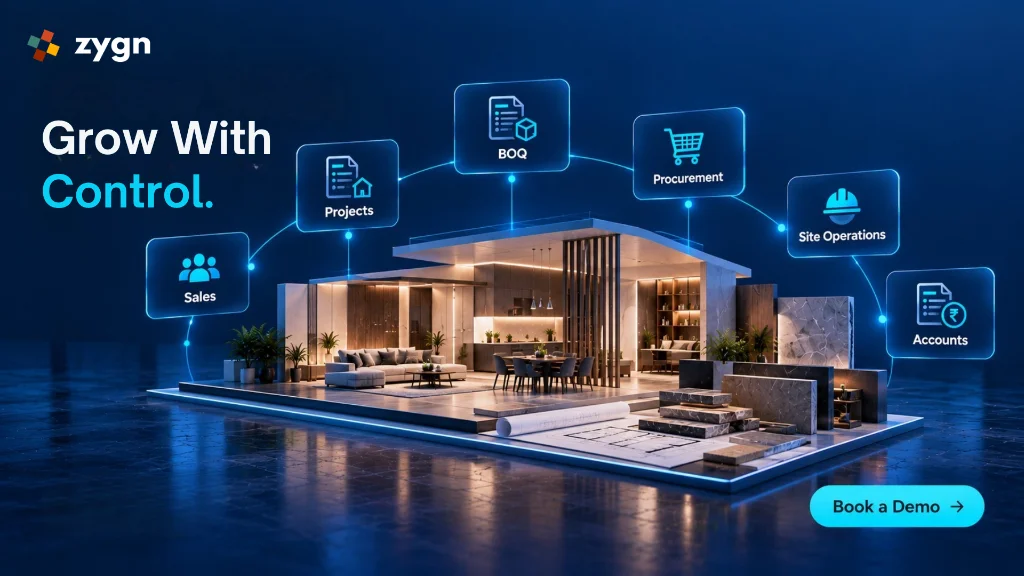
Grow Your Interior Business With Greater Control.
Bring your leads, projects, BOQ, procurement, site operations, and accounts into one connected system with ZYGN.
Book a Free Demo →