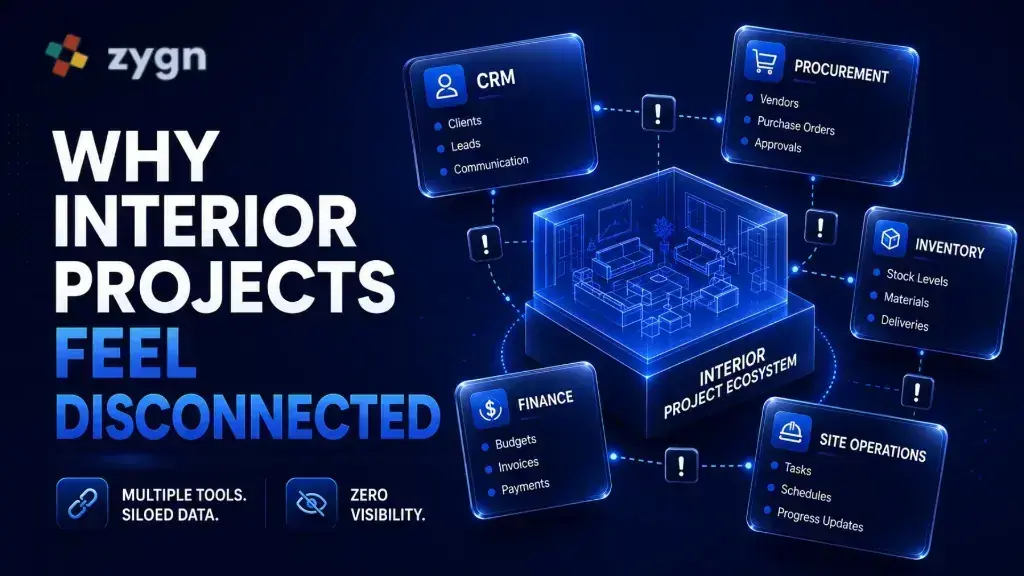
Interior design businesses have become significantly more technology-driven over the last few years. From managing leads and client communication to tracking procurement, inventory, project execution, and finances, firms now rely on multiple digital tools to support their operations.
Despite this digital transformation, many businesses continue to experience the same operational challenges: delayed updates, fragmented communication, limited visibility, and inefficient coordination between teams.
The challenge is not the absence of software. The challenge is managing projects across systems that were never designed to work together.
As businesses scale and project demands increase, disconnected workflows make it harder to maintain control over project delivery, procurement activities, team collaboration, and overall business performance.
The Growing Complexity of Interior Business Operations
Modern interior projects involve far more than design execution.
Today's businesses must manage:
- Lead generation and sales
- Client onboarding
- Design approvals
- BOQ preparation
- Vendor coordination
- Procurement activities
- Inventory tracking
- Site execution
- Workforce management
- Financial reporting
Each function contributes valuable information that impacts project success. However, when these processes operate independently, maintaining visibility becomes increasingly difficult.
Why Project Information Remains Scattered
Most interior businesses adopt software gradually.
- A CRM is introduced to manage leads.
- Project tracking happens in spreadsheets.
- Communication takes place through messaging applications.
- Procurement is managed separately.
- Finance teams operate using independent accounting systems.
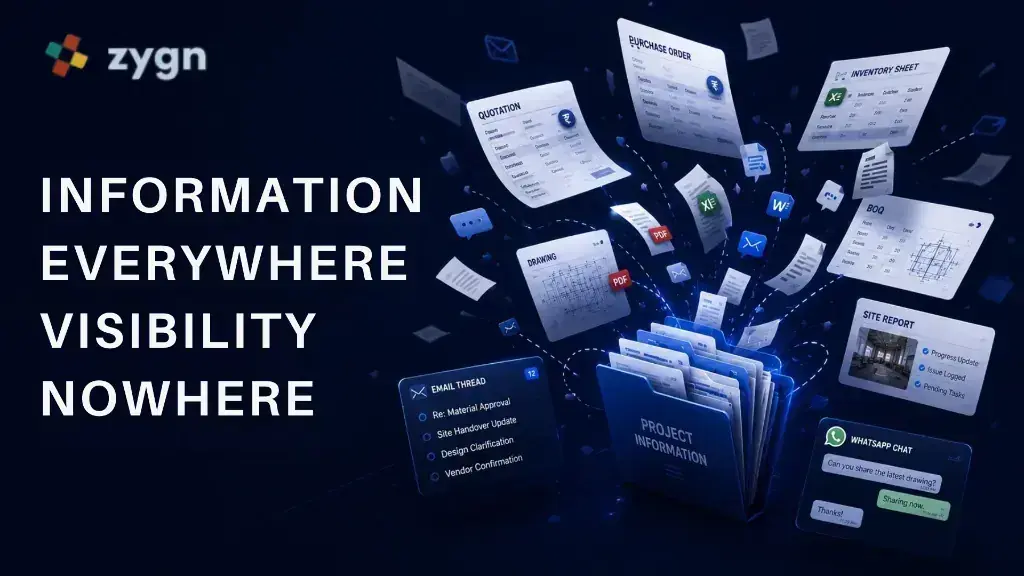
While each solution serves a specific purpose, information often becomes distributed across multiple platforms. As a result, teams spend valuable time searching for updates rather than executing projects efficiently.
The Visibility Challenge in Modern Interior Projects
Project visibility has become one of the biggest operational challenges for growing interior businesses.
Leadership teams need real-time access to:
- Project progress
- Design approvals
- Procurement status
- Inventory availability
- Site execution updates
- Financial performance
When information exists across disconnected systems, gaining a complete view becomes difficult. Without visibility, businesses struggle to identify risks early, allocate resources effectively, and maintain control over project timelines.
How Disconnected Tools Create Operational Silos
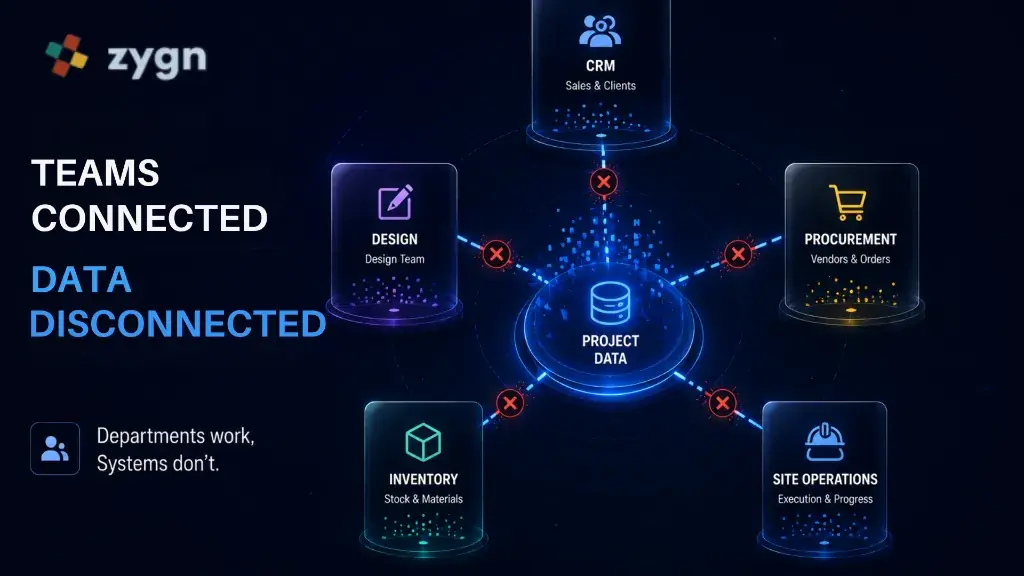
The problem is not the number of tools being used. The problem is that those tools rarely communicate with one another. This creates operational silos where each department works with different information.
Common challenges include:
- Scattered Information: Project data exists across multiple tools.
- Procurement Delays: Approval and material tracking lack visibility.
- Inventory Mismatches: Stock updates are not aligned with project needs.
- Execution Gaps: Site teams often work without real-time updates.
These challenges affect both project delivery and operational efficiency.
Why Procurement, Inventory, and Site Execution Often Fall Out of Sync
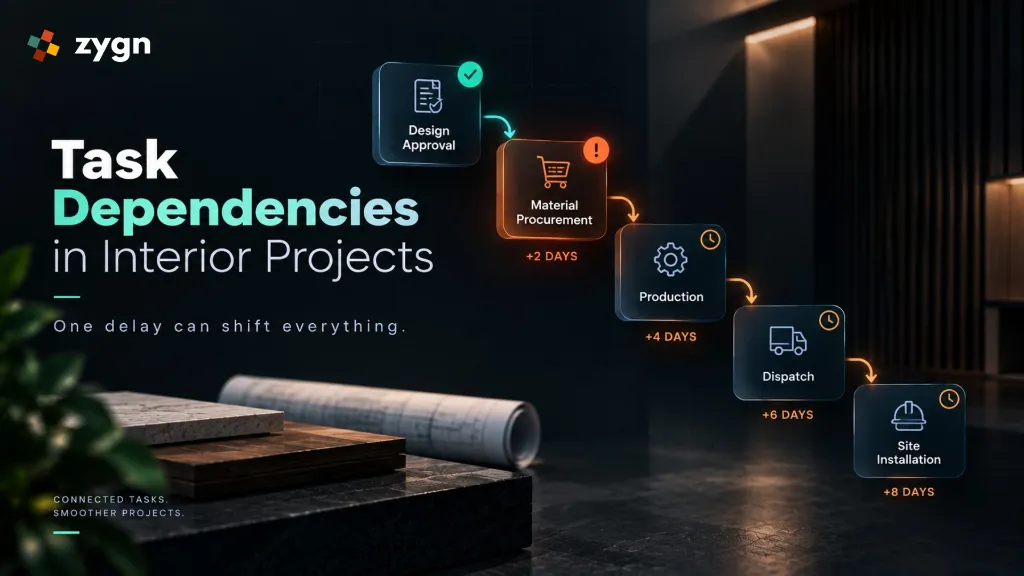
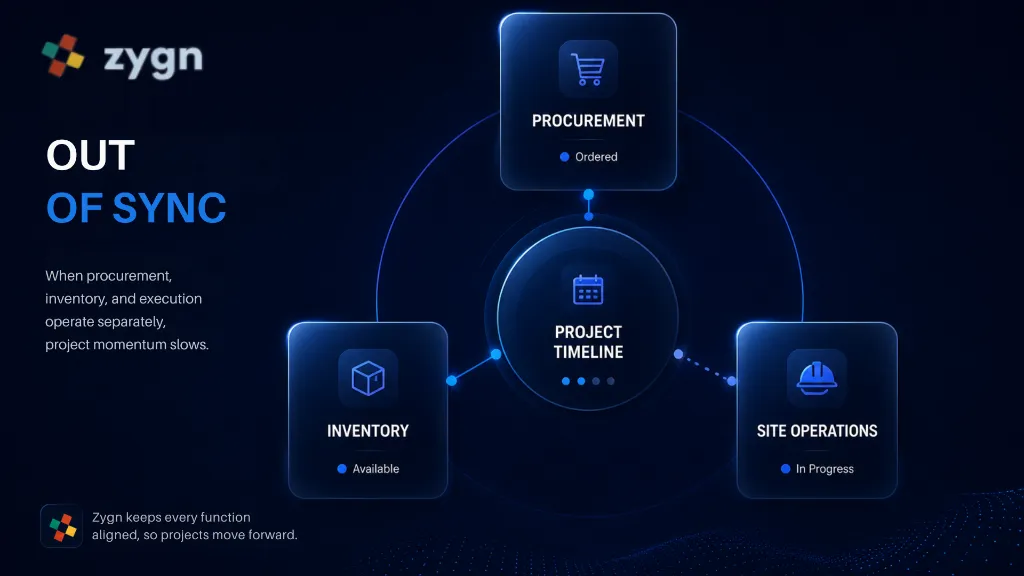
Procurement plays a critical role in interior project delivery. Every project depends on timely approvals, vendor coordination, material availability, and inventory management.
When procurement workflows operate independently from project management systems, businesses often experience:
- Material shortages
- Delayed approvals
- Vendor coordination issues
- Inventory inaccuracies
- Site execution delays
Without visibility across these functions, maintaining project momentum becomes increasingly difficult.
The Limits of Standalone Tools
Many interior businesses still depend on spreadsheets, messaging apps, and separate software for daily operations.
While these tools help manage individual tasks, they often struggle to support connected project workflows.
As project volume increases, businesses commonly face:
- Information scattered across multiple platforms
- Difficulty tracking project updates
- Time-consuming coordination between teams
- Delayed access to critical project data
- Limited visibility across departments
What works for small teams can quickly become difficult to manage as projects, teams, and operational complexity grow.
Hidden Costs of Fragmented Project Workflows
Disconnected workflows create inefficiencies that often remain hidden. Teams spend hours every week:
- Searching for information
- Following up on approvals
- Preparing status reports
- Coordinating between departments
- Verifying procurement updates
Over time, these inefficiencies contribute to:
- Project delays
- Increased operational costs
- Reduced productivity
- Lower profitability
The impact becomes even greater as businesses scale.
Signs Your Interior Business Has Outgrown Traditional Systems
Your workflow may require modernization if:
- Teams frequently request project updates.
- Information is spread across multiple platforms.
- Reports require manual preparation.
- Procurement delays are becoming common.
- Communication is difficult to track.
- Leadership lacks real-time visibility.
- Teams spend more time coordinating than executing.
These indicators often suggest that disconnected systems are limiting business growth.
What a Connected Interior Workflow Looks Like
A connected workflow creates a single source of truth across the organization.
In a connected system:
- Leads flow directly into projects.
- Design approvals remain centralized.
- BOQs connect with procurement.
- Inventory updates happen automatically.
- Site execution becomes visible in real time.
- Communication stays organized.
- Reports are generated instantly.
Instead of searching for information, teams can access everything they need from one platform.
How zygn Unifies Interior Project Management
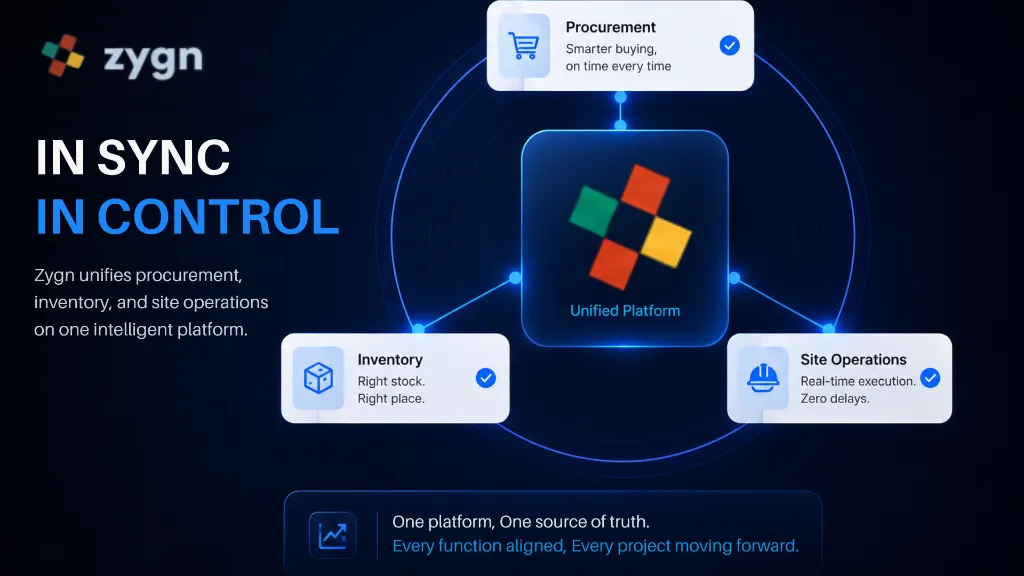
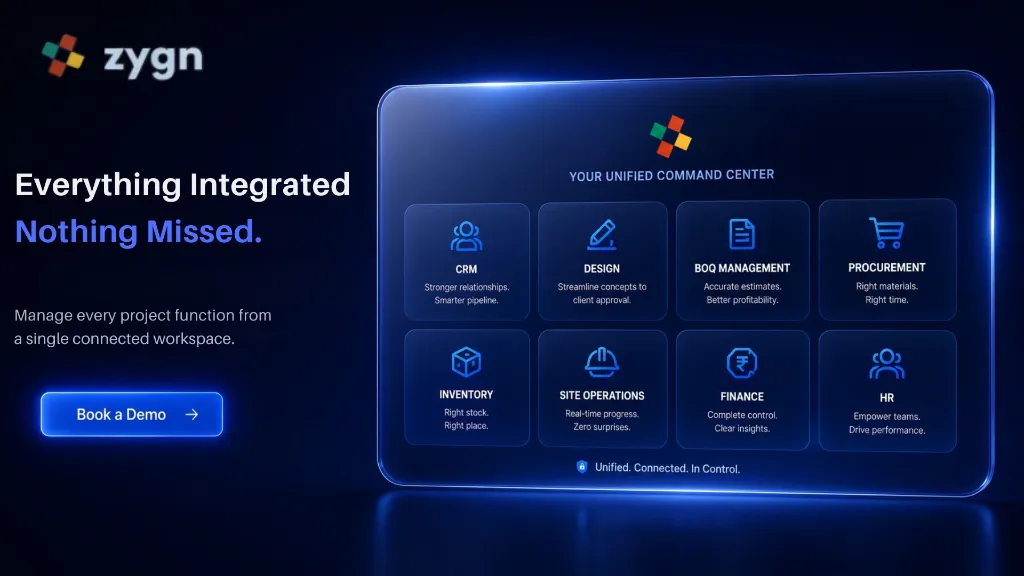
zygn is built specifically for interior design and execution businesses. It brings together the core functions required to manage projects efficiently:
- CRM & Lead Management: Track inquiries, manage pipelines, and improve client engagement.
- Design Flow Management: Monitor approvals, revisions, and project milestones.
- BOQ Management: Create and manage project requirements with greater visibility.
- Procurement Management: Coordinate vendors, approvals, purchases, and material tracking.
- Inventory Management: Track stock movement and availability in real time.
- Onsite Operations: Monitor project execution and site activities with complete visibility.
- Accounts & Finance: Manage expenses, reporting, and financial operations.
- HR & Workforce Management: Handle attendance, payroll, and workforce coordination.
By connecting every stage of operations, zygn helps businesses eliminate workflow fragmentation and improve project delivery.
Benefits of a Unified Project Management Platform
Businesses that move to connected workflows often experience:
- Faster project delivery
- Better collaboration
- Improved visibility
- Reduced manual effort
- Greater accountability
- Better resource utilization
- Increased operational efficiency
- Improved profitability
- Stronger scalability
Most importantly, teams spend less time managing systems and more time delivering successful projects.
Frequently Asked Questions
Why do interior projects feel disconnected?
Because critical information often exists across multiple systems that do not communicate effectively.
What causes operational silos?
Using separate tools for communication, project management, procurement, inventory, and finance can create fragmented workflows.
Why is project visibility important?
Visibility helps teams identify risks, monitor progress, and make informed decisions.
Can one platform replace multiple tools?
Modern business management platforms can consolidate several operational functions into one connected system.
How does zygn improve project management?
zygn centralizes information across projects, procurement, inventory, operations, communication, and reporting.
Key Takeaways
- Disconnected tools create operational silos.
- Limited visibility impacts project performance.
- Procurement and execution require stronger alignment.
- Manual workflows reduce efficiency.
- Connected systems improve collaboration and accountability.
- zygn brings multiple business functions into one unified platform.
Conclusion
The challenge facing interior businesses today is not only adopting technology but also it is managing too many disconnected technologies.
As projects become larger and operations become more complex, fragmented workflows create communication gaps, visibility challenges, and unnecessary delays.
The future of interior project management lies in connected workflows that unify projects, procurement, inventory, operations, and communication into a single ecosystem.
Businesses that embrace this approach gain greater control, stronger collaboration, improved efficiency, and the ability to scale with confidence.
Ready to Simplify Your Operations?
Discover how zygn helps interior businesses manage CRM, Design Flow, BOQs, Procurement, Inventory, Onsite Operations, Accounts, HR, and Reporting from one connected platform.
Book a Free Demo Today and experience a smarter way to manage your projects.