The Tool Most Interior Firms Use Every Day
WhatsApp has become the default communication channel for many interior design firms.
Client updates, site photos, vendor discussions, team instructions, approvals, and project decisions often happen through chat messages.
It is fast, familiar, and convenient.
But as projects grow in complexity, many firms begin to realize a critical problem:
Communication is not project management.
As projects become more complex, businesses need more than conversations. They need a system that keeps every task, update, and decision connected.
While WhatsApp helps teams exchange information, it does not provide the structure needed to manage timelines, tasks, procurement, inventory, budgets, and execution.
This is where many interior businesses experience delays, confusion, and operational inefficiencies.
Why Interior Firms Depend on WhatsApp
There is a reason WhatsApp plays a major role in day-to-day operations.
It allows teams to:
- Share updates instantly
- Send site photos and videos
- Communicate with clients quickly
- Coordinate with vendors
- Resolve issues in real time
For communication, it works exceptionally well.
The challenge begins when businesses try to use it as their primary project management system.
That's when communication starts replacing processes, and small gaps begin to affect project execution.
The Hidden Problems of Managing Projects Through WhatsApp
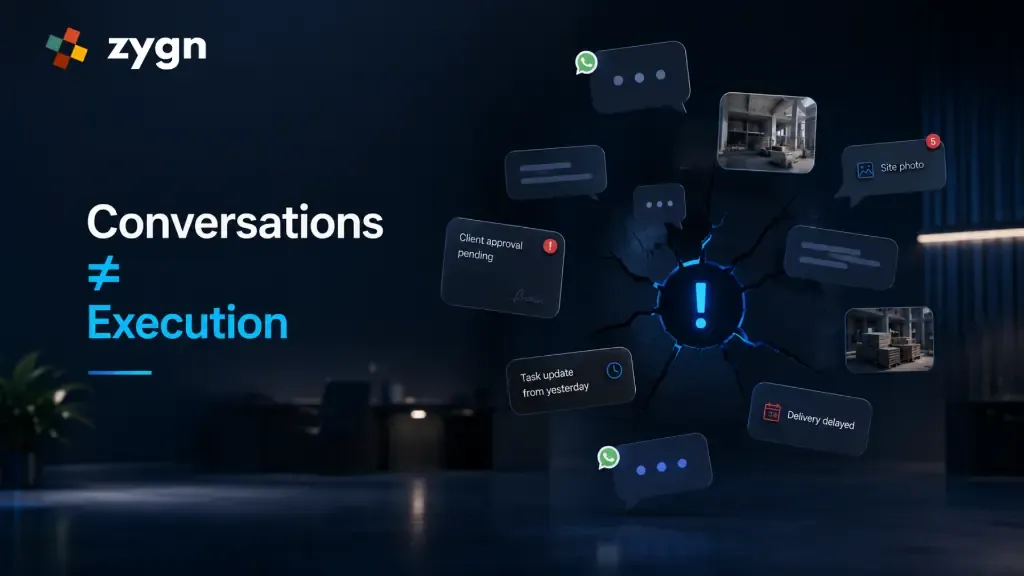
1. Important Information Gets Lost
Hundreds of messages are exchanged every day.
A client approval shared last week can easily disappear inside a long conversation thread.
A vendor commitment made two days ago may be forgotten.
A site instruction shared in a group chat can become impossible to locate later.
When project information lives inside chats, finding critical details becomes difficult and time-consuming.
Teams end up spending more time searching for information than acting on it.
2. No Task Ownership
A message saying:
"Please complete the wardrobe installation by Friday."
is not a task management system.
There is no clear ownership, deadline tracking, progress status, or accountability.
Team members may assume someone else is handling the work.
Managers have no visibility into completion status.
As projects grow, this creates operational gaps.
Without clear ownership, even simple tasks can be delayed or overlooked.
3. No Project Timeline Visibility
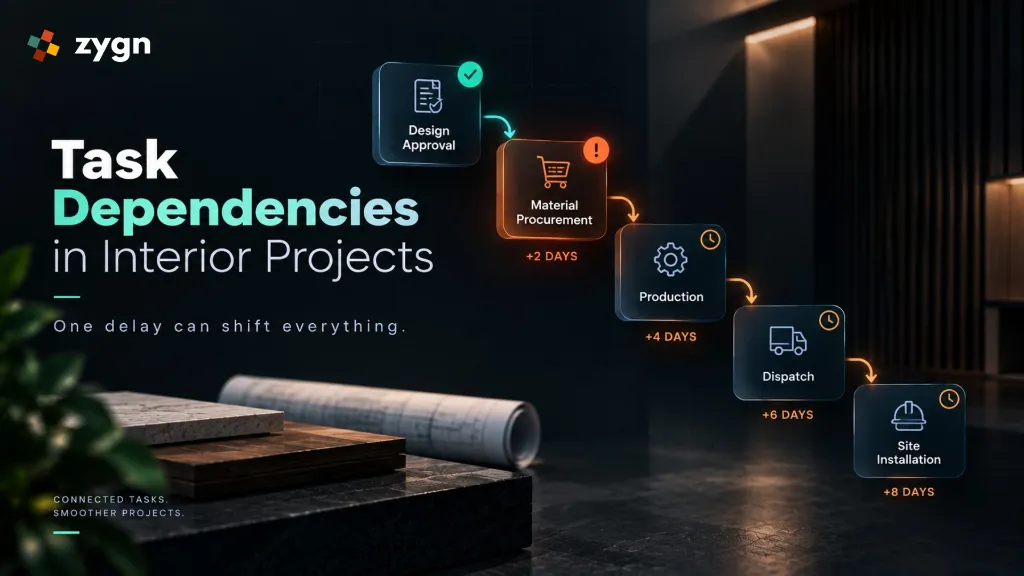
Successful interior execution depends on sequencing.
- Design approvals affect procurement.
- Procurement affects deliveries.
- Deliveries affect onsite execution.
- Execution affects handover timelines.
WhatsApp conversations cannot show project progress across stages.
Without a structured timeline, delays often become visible only after they impact delivery schedules.
4. Procurement Becomes Difficult to Track
Interior projects involve:
- Multiple vendors
- Purchase requests
- Purchase orders
- Material deliveries
- Site requirements
Managing procurement through chats creates confusion.
Teams struggle to answer simple questions:
- Was the material ordered?
- Has the vendor confirmed delivery?
- Is the purchase request approved?
- What is pending?
Project execution slows when procurement visibility is missing.
5. No Centralized Project Information
When information is spread across personal chats, team groups, emails, and spreadsheets, businesses lose their single source of truth.
Project documents, approvals, notes, and updates become fragmented.
This increases dependency on individuals rather than systems.
When a team member is unavailable, valuable project knowledge often becomes inaccessible.
6. Limited Reporting and Accountability
Business owners need answers to questions such as:
- Which projects are delayed?
- What tasks are pending?
- Which vendors are behind schedule?
- What is the current project status?
- How is team productivity performing?
WhatsApp cannot provide operational visibility.
Without reporting, decision-making becomes reactive rather than proactive.
What Modern Interior Project Management Actually Requires
Growing interior businesses need more than communication.
They need a connected system that manages every stage of execution.
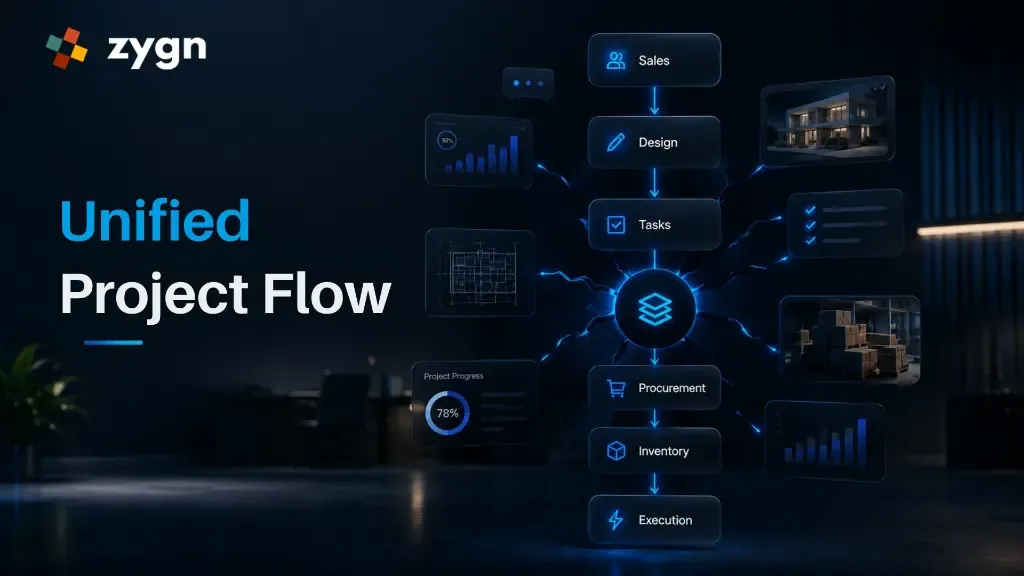
A modern project management environment should provide:
- Structured Project Stages: Every project should move through clearly defined phases with complete visibility.
- Task Management: Tasks should have ownership, deadlines, priorities, and status tracking.
- Timeline Tracking: Project milestones should be monitored continuously to identify delays before they become problems.
- Procurement Management: Material sourcing, purchase requests, vendor coordination, and delivery tracking should be connected to project execution.
- Team Collaboration: Everyone should work from the same information instead of relying on scattered conversations.
- Real-Time Reporting: Business leaders should have instant visibility into project health, timelines, and operational performance.
How zygn Connects Communication with Execution
At zygn, we recognize that communication remains essential.
That's why zygn doesn't replace WhatsApp. It complements it by connecting conversations with project execution and business operations.
zygn's Conversation module helps businesses engage leads quickly through WhatsApp automation and structured communication workflows.
But project execution goes far beyond messaging.
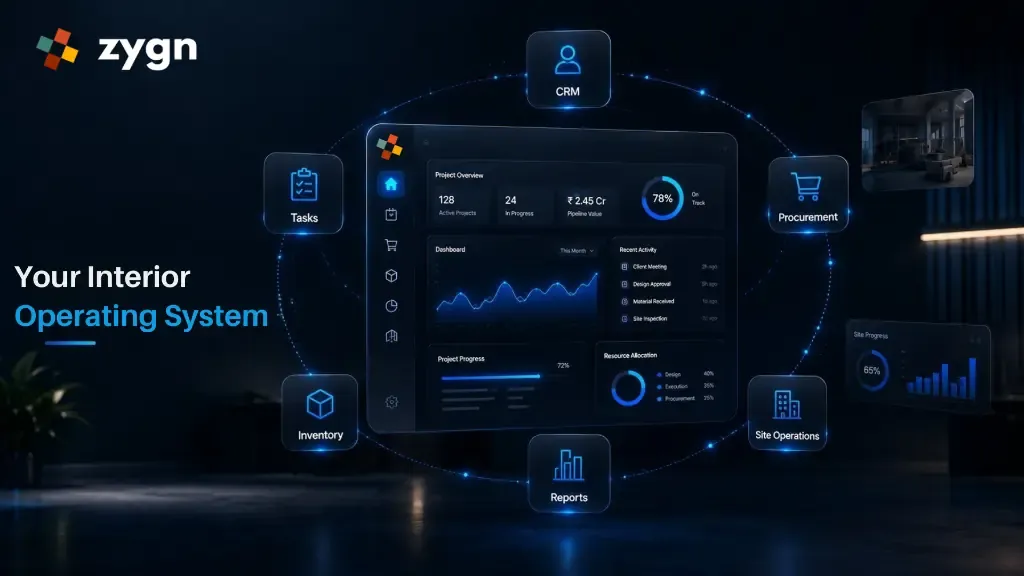
Through a connected Interior Operating System, zygn brings together:
- Sales CRM
- Design Flow
- Task Management
- Project Timelines
- Procurement
- Inventory Tracking
- Onsite Operations
- Team Management
- Accounts and Reporting
Instead of searching through chats for updates, teams work with structured workflows and real-time visibility.
Every department operates from the same source of truth.
This reduces confusion, improves accountability, and helps projects move forward with clarity.
Communication stays connected to execution rather than existing separately from it.
Conclusion
WhatsApp is one of the most valuable communication tools available today.
But communication alone cannot manage projects.
As interior businesses scale, relying on chat conversations to track tasks, approvals, procurement, and project progress creates operational challenges that limit growth.
The firms that scale successfully move beyond managing projects through conversations.
They manage projects through connected systems.
When information, communication, and execution work together, teams become more productive and projects become easier to manage.
Because great project delivery requires more than messages.
It requires visibility, accountability, and complete operational control.
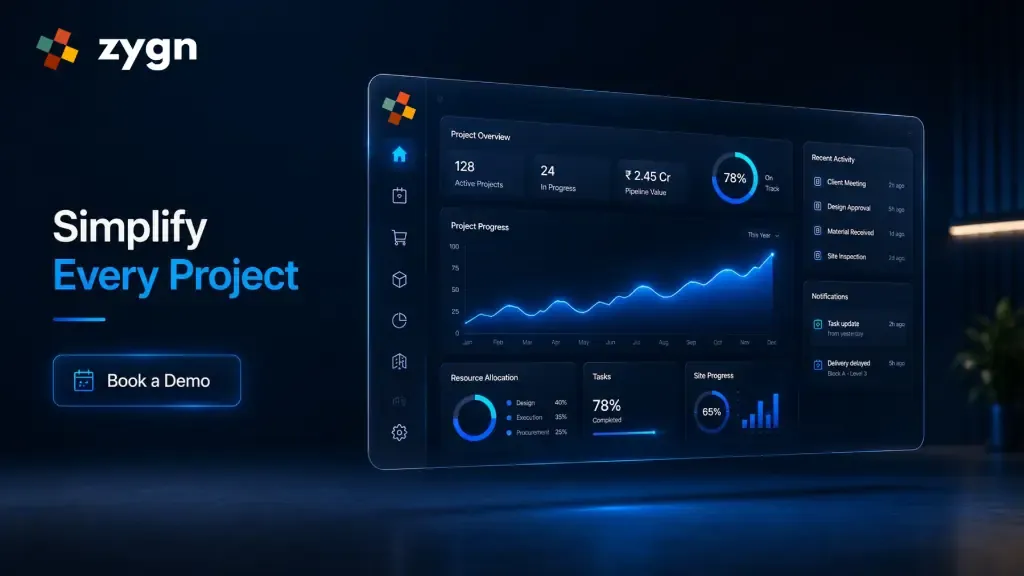
Ready to Move Beyond WhatsApp-Based Project Management?
Discover how zygn helps interior firms connect communication, project execution, procurement, onsite operations, and business management through one unified Interior Operating System.