Automation is becoming an important conversation in India's modular furniture manufacturing industry. From digital cutting lists and CNC machines to structured material planning and production workflows, manufacturers are exploring ways to improve accuracy, reduce waste, and manage growing order volumes. But successful automation does not always begin with expensive machinery. For many panel-furniture businesses, it starts with organizing the information that moves between design, purchasing, cutting, and production.
Why Automation Is Gaining Attention in India's Furniture Industry
India's modular kitchen and panel-furniture manufacturing sector is evolving as businesses respond to changing customer expectations, production requirements, and competitive pressures.
At India Kitchen Congress 2026, industry discussions highlighted the importance of manufacturing technology, process discipline, and practical automation.
One session, "Making Automation Work in the Indian Context: Reality, ROI, and Readiness," focused on questions such as where manufacturers should automate first, how to evaluate investment returns, and what operational foundations are necessary before introducing advanced machinery.
This reflects an important shift in how furniture manufacturers approach technology.
The question is no longer simply whether automation is useful. It is which processes should be automated, when investment makes financial sense, and how technology can fit existing production requirements.
For Indian panel-furniture manufacturers, the most effective approach may involve combining digital planning, skilled workers, and machinery according to the needs of the business.
What Does Automation Mean in Panel-Furniture Manufacturing?
Automation in furniture manufacturing refers to using technology, machinery, and digital systems to reduce repetitive manual work and improve production consistency. It can take several forms:
Some manufacturers introduce CNC machines for cutting and machining. Others begin with digital cutting lists, organized material records, or structured production instructions. Larger factories may explore integrated production lines, automated material handling, and software-connected manufacturing equipment.
These technologies serve different purposes. A digital cutting list helps organize production information. A CNC machine performs programmed machining operations. A connected production system coordinates information across multiple stages.
Understanding these differences is important because automation is not a single product or investment. It is a gradual improvement in how production activities are planned, performed, and controlled.
What Indian Panel-Furniture Manufacturers Are Adopting or Evaluating
Several technologies are relevant to the industry's ongoing automation discussions. Their adoption varies by factory size, product mix, investment capacity, and production requirements.
Panel-furniture production depends on accurate component dimensions and quantities. A modular kitchen, wardrobe, or office furniture project may require dozens or hundreds of panels. When cutting information is maintained manually, errors can occur in measurements, quantities, and communication between design and production teams.
Digital cutting lists help organize this information. They provide a more structured way to prepare and communicate cutting requirements. For smaller workshops, this can be a practical starting point because it addresses an everyday production problem without necessarily requiring new machinery. Businesses exploring this approach can learn more about cutting list software and its role in furniture production planning.
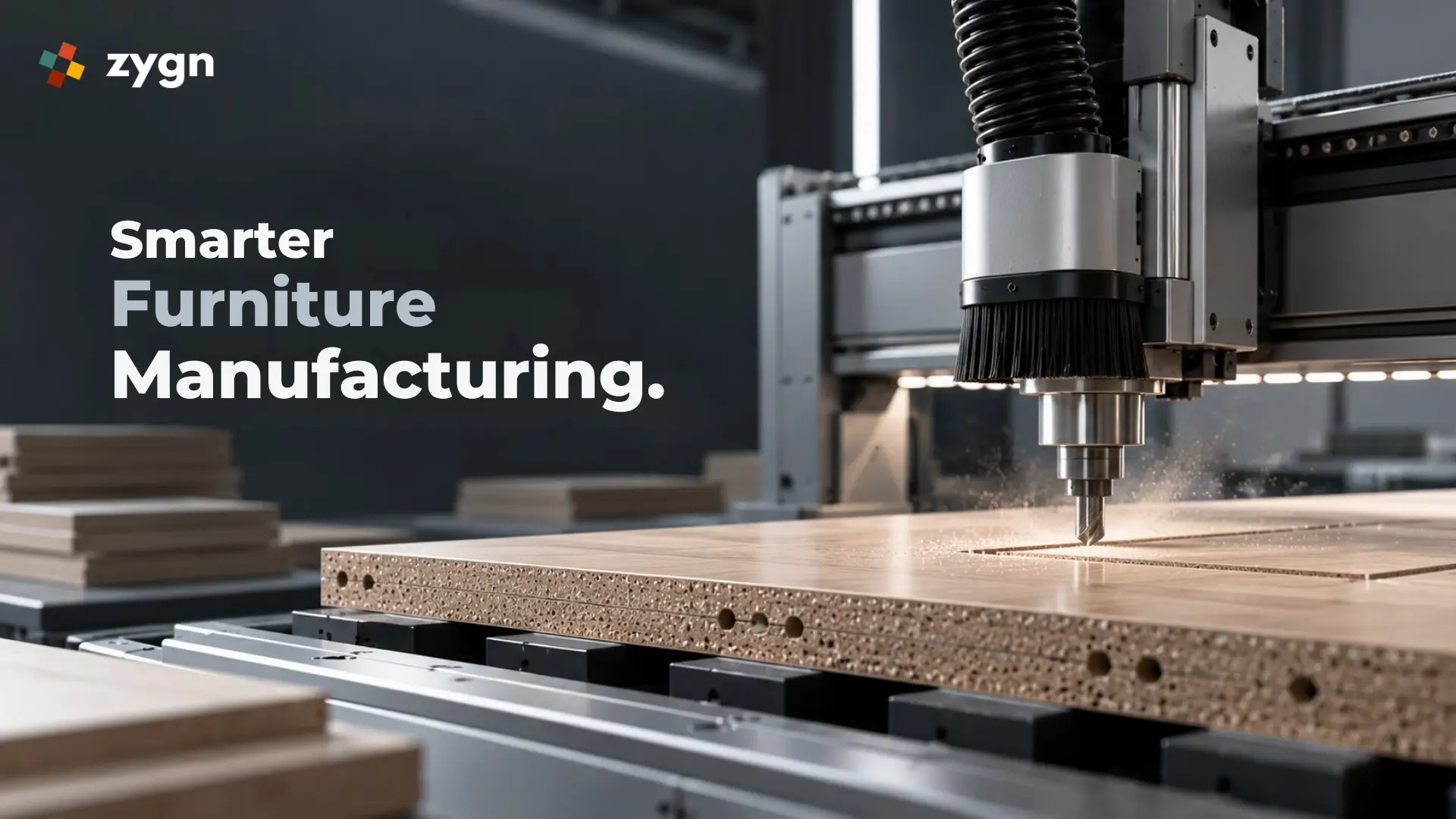
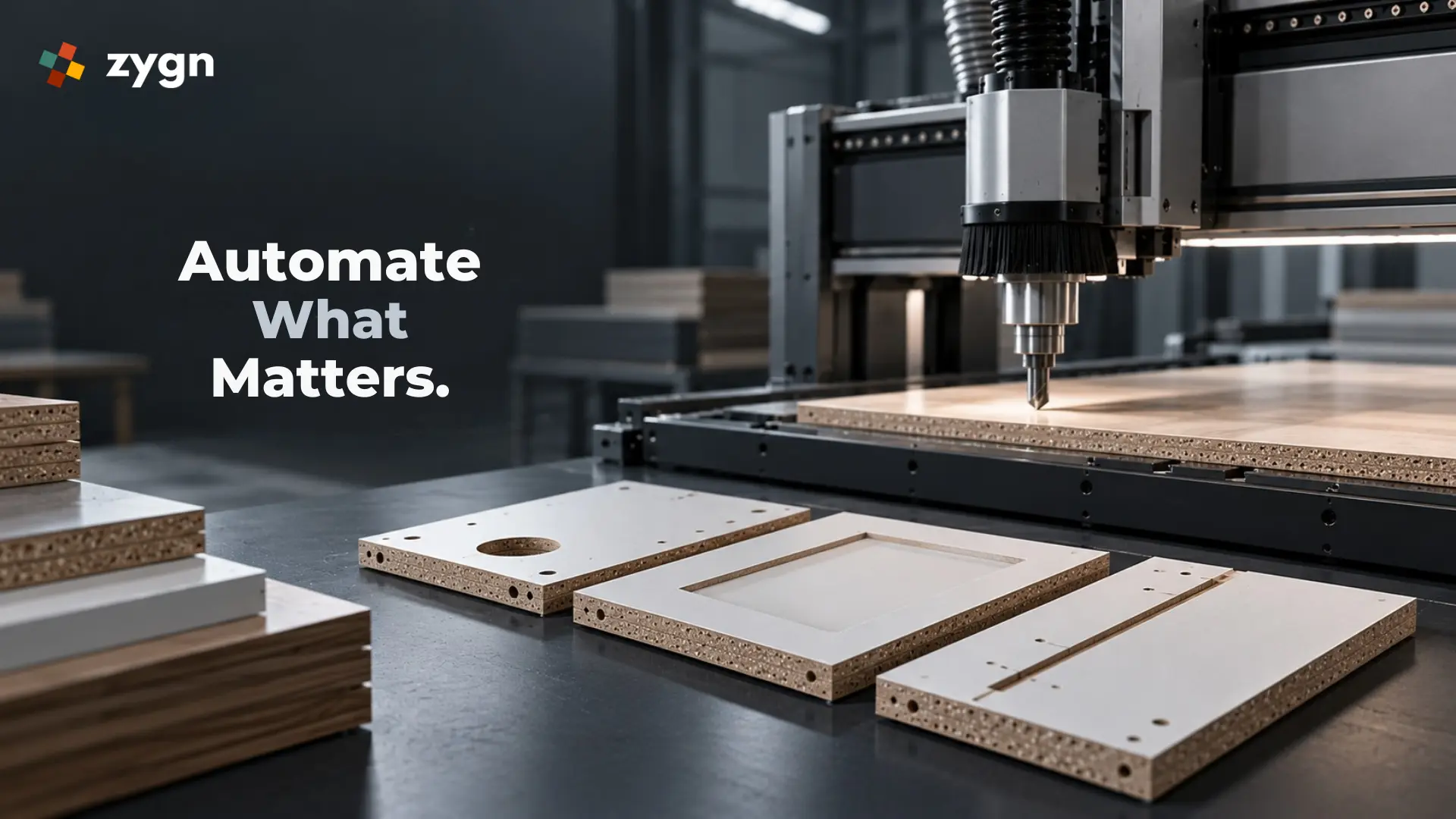
Computer Numerical Control (CNC) machines use programmed instructions to perform machining operations. In panel-furniture manufacturing, CNC equipment can support cutting, drilling, routing, and other production activities, depending on the machine configuration.
The main advantages can include repeatability, machining accuracy, and reduced dependence on manual positioning. However, CNC machinery also requires investment, maintenance, trained operators, and accurate production data. A machine cannot compensate for incorrect component dimensions or poorly prepared instructions. Manufacturers therefore need reliable planning processes before expecting automation to deliver consistent results.
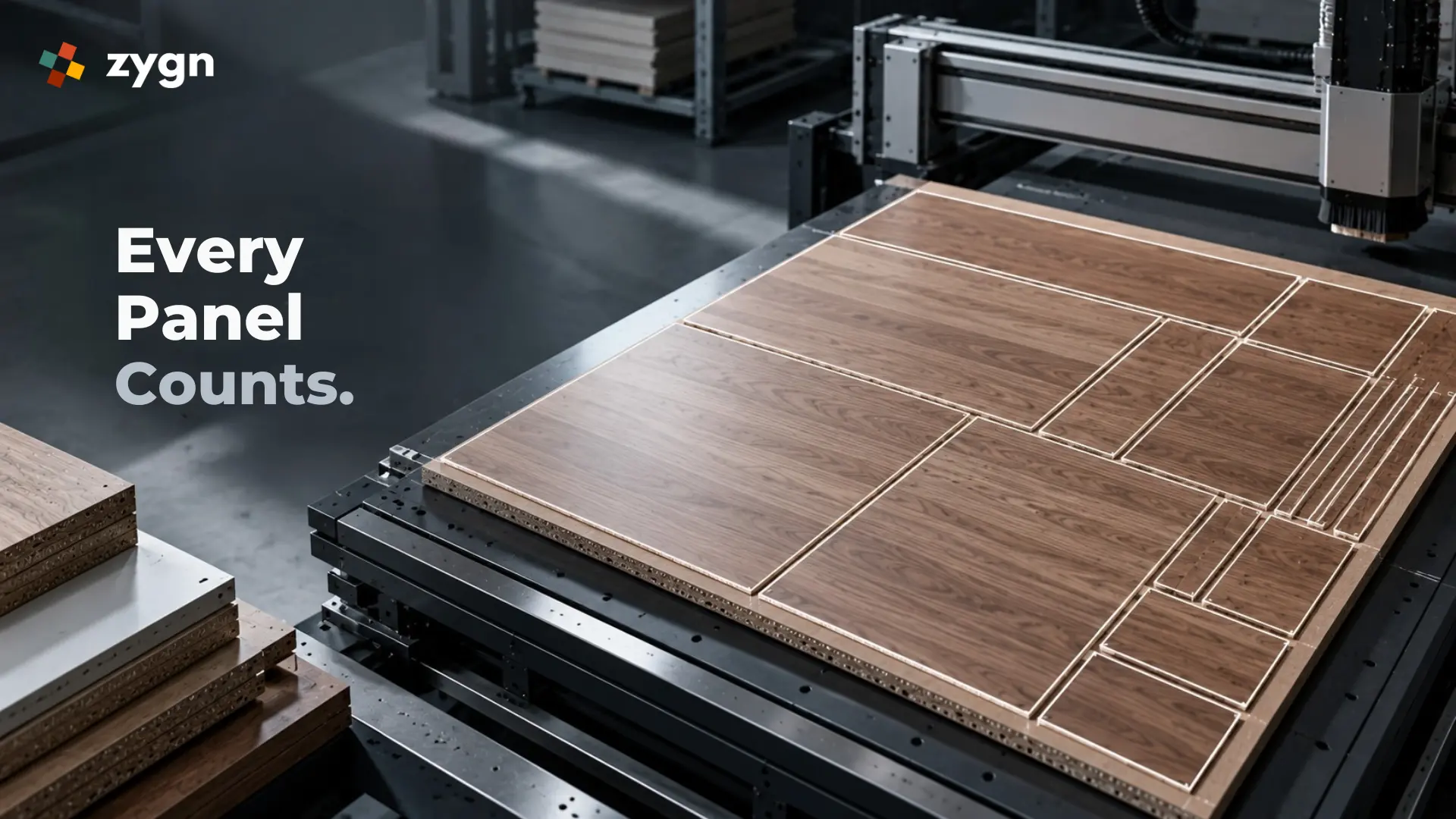
Panel-based furniture manufacturing frequently involves cutting multiple components from standard-sized boards. Poor cutting arrangements can increase material waste. Cutting optimization tools can help manufacturers evaluate how components may be arranged on available panels.
Depending on the system, optimization may consider dimensions, quantities, kerf, grain direction, and other cutting constraints. This can support better material utilization. However, cutting-list preparation and automated cutting optimization are different capabilities. Manufacturers should confirm which functions a particular software product actually provides before purchasing it.
Production depends on the availability of appropriate boards, hardware, fittings, and other components. When material requirements are maintained separately from production instructions, purchasing teams may struggle to identify accurate quantities.
Structured material planning helps businesses organize requirements before production begins. This can improve coordination between purchasing and workshop operations. For manufacturers handling multiple projects, clearer material information also helps reduce repeated clarification and last-minute purchasing.
A furniture production job passes through several stages. These may include cutting, edge banding, drilling, assembly, finishing, inspection, and dispatch. When progress is communicated informally, managers may not know which orders are delayed or which activities remain incomplete.
Structured production tracking provides a consistent way to record job progress and responsibilities. This does not necessarily require a fully automated factory. Even a clearly maintained digital workflow can improve operational visibility.
Why Buying Machines Is Not the Same as Automating Production
One of the biggest misconceptions about manufacturing automation is that purchasing advanced equipment automatically improves productivity. In reality, machinery is only one part of the production system.
Consider a workshop that invests in a CNC cutting machine. If design dimensions are frequently revised, cutting instructions are incomplete, or materials are unavailable, the machine may spend considerable time waiting. The business has invested in faster equipment without addressing the processes that determine whether the equipment can be used effectively.
This creates a gap between machine capability and actual production performance. Successful automation requires coordination between people, information, materials, and equipment. Before investing in new machinery, manufacturers should evaluate whether their existing production processes are sufficiently organized.
The Role of Cutting Lists in Automated Furniture Production
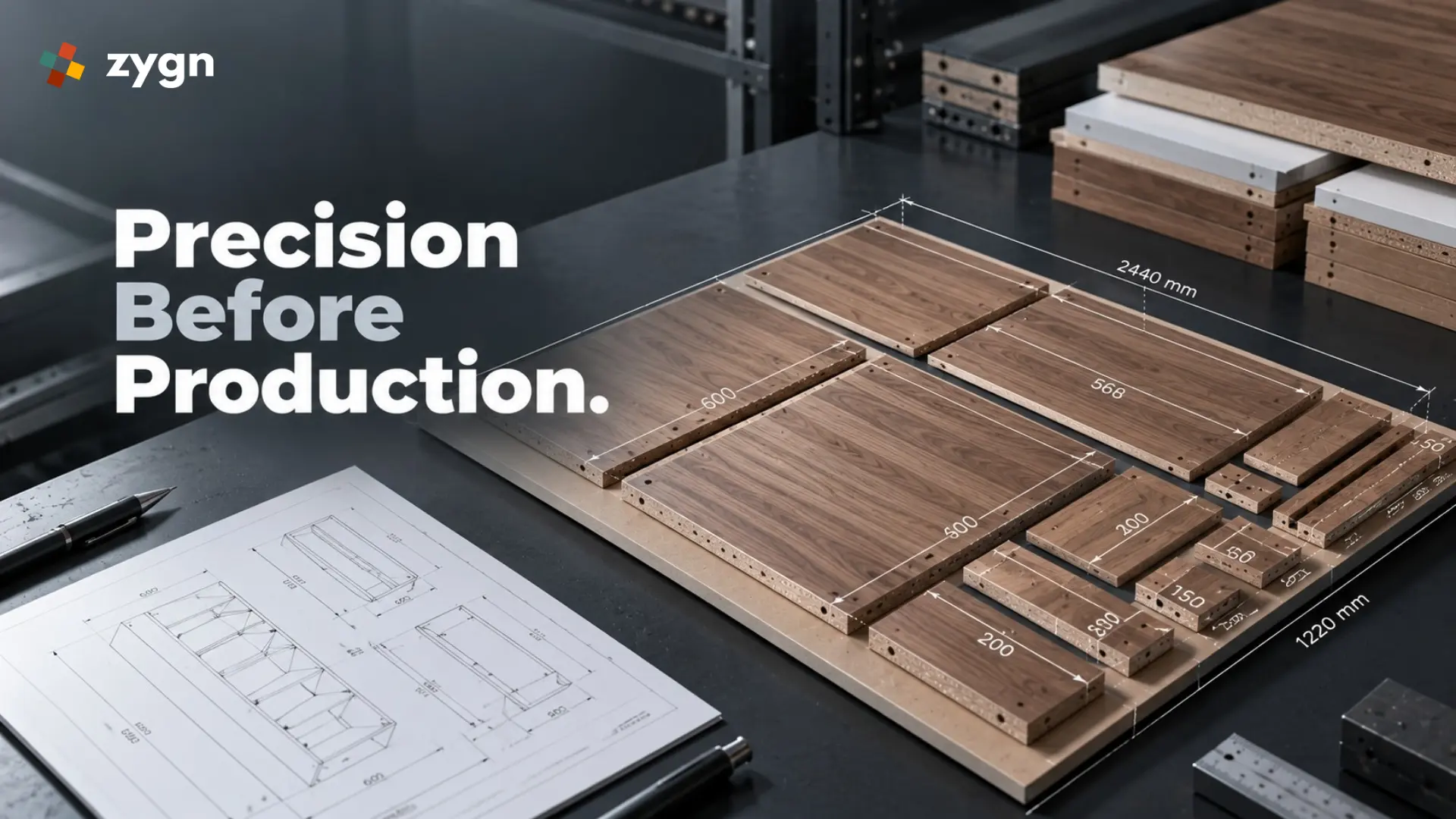
A cutting list connects furniture design requirements with production activities. It identifies the components needed for a particular job, including dimensions and quantities. For modular furniture manufacturers, this information becomes the foundation for several downstream activities:
If the cutting list is inaccurate, errors can affect material purchasing, machining, and assembly. A structured cutting-list process helps manufacturers establish a more consistent starting point. It can also reduce the need for production teams to interpret scattered drawings, messages, or spreadsheets.
For businesses evaluating basic digital tools, this guide to wood cut list apps explains how cutting-list planning supports woodworking and smaller production operations. Digital cutting lists are not equivalent to machine integration, but they can form an important part of a more organized production workflow.
Manual Manufacturing vs. Structured Digital Production
Consider a modular furniture workshop managing several orders simultaneously.
| Production Activity | Manual Approach | Structured Digital Approach |
|---|---|---|
| Component Dimensions | Notes and spreadsheets | Organized component records |
| Cutting Instructions | Informal communication | Structured cutting lists |
| Material Requirements | Separate calculations | Consistent material planning |
| Production Responsibilities | Verbal instructions | Clearly assigned activities |
| Job Progress | Calls and messages | Recorded status updates |
| Production Changes | Multiple file versions | Controlled information updates |
A structured approach does not eliminate the need for skilled workers. Instead, it helps workers operate with clearer instructions and reduces avoidable coordination problems. For growing manufacturers, these improvements can become increasingly valuable as order volumes and product variations increase.
How Small and Mid-Sized Manufacturers Can Approach Automation
Not every furniture business needs a fully automated production line. The right approach depends on production volume, product complexity, workforce skills, available capital, and existing operational problems.
Begin by reviewing where time, materials, or effort are being lost. Common problems may include incorrect cutting dimensions, repeated material calculations, missing components, and unclear production instructions. Prioritize problems that occur frequently and have a measurable impact.
Maintain consistent component dimensions, material specifications, and production instructions. Standardized information reduces confusion and creates a stronger foundation for digital tools.
Consider tools that help organize cutting lists, material requirements, and job information. This may be a practical first step before investing in more advanced machinery.
Assess whether new equipment can improve a specific production process. Consider machine utilization, operator training, maintenance, software compatibility, and expected cost savings. Avoid investing solely because a technology is becoming popular.
Automation changes how employees work. Operators may need to understand digital instructions, machine settings, quality checks, and updated production procedures. Training remains essential even when equipment performs repetitive operations.
Review whether the changes have improved production performance. Useful measures may include material waste, rework, production time, machine utilization, and order completion reliability. These results help determine whether further automation investment is justified.
How to Evaluate the ROI of Furniture Manufacturing Automation
Return on investment is an important consideration for Indian furniture manufacturers, particularly small and mid-sized businesses. Automation may reduce manual effort or improve output, but the financial benefit depends on actual operating conditions.
Manufacturers should consider:
- Initial equipment and software costs
- Installation and employee training
- Maintenance and operating expenses
- Expected production volume
- Material savings
- Reduction in rework
- Changes in labour requirements
- Equipment utilization
For example, a high-capacity machine may not deliver sufficient value if the workshop does not have enough orders to keep it productive. Conversely, a relatively small improvement in cutting accuracy may provide meaningful savings for a business that processes large volumes of panel material. The objective should be to select automation investments based on measurable business needs.
Why Connected Workflows Matter More Than Isolated Technology
Furniture production involves several departments and activities. Design teams prepare requirements, purchasing teams arrange materials, workshop employees carry out production, project managers coordinate installation and delivery, and accounts teams monitor financial information.
When each department maintains separate records, businesses may struggle to maintain consistency. A design change may not reach the cutting team immediately. Updated material quantities may not be reflected in purchasing records. Production delays may not be communicated to project managers.
Connected workflows help reduce these information gaps. They support clearer coordination between the activities that contribute to successful order completion. For manufacturers looking to scale, organizing these processes can be as important as investing in faster machinery.
Where ZYGN Fits Into the Furniture Production Workflow
ZYGN is designed for interior design and project-driven businesses that need to coordinate multiple operational functions. Its platform includes BOQ Management, Procurement, Inventory, Project Management, Site Operations, and Accounts. These functions are relevant to businesses managing material requirements, purchasing activities, project execution, and related financial information.
For modular furniture businesses, structured cutting-list planning can also support clearer communication of production requirements. ZYGN's cutting list software offering is relevant to businesses evaluating ways to organize cutting-related information.
However, ZYGN should not be described as a CNC machine controller, automated nesting engine, or complete manufacturing execution system unless those capabilities are specifically confirmed. Its role in this discussion is to highlight how organized business and production information can support more consistent operations. For manufacturers beginning their automation journey, improving planning and coordination may be a useful step before making larger machinery investments.
Frequently Asked Questions
What is automation in furniture manufacturing?
Furniture manufacturing automation involves using machinery, digital tools, and structured systems to reduce repetitive manual work and improve production consistency. Examples include CNC equipment, digital cutting lists, cutting optimization tools, and production tracking systems.
What automation technologies are relevant to Indian modular furniture manufacturers?
Relevant technologies include CNC cutting and machining, digital cutting lists, panel optimization software, material planning systems, and production tracking tools. The appropriate combination depends on the manufacturer's size, product mix, and operating requirements.
Do small furniture workshops need expensive automation machines?
Not necessarily. Small workshops can begin by improving cutting instructions, material planning, and production records. Machinery investment should be based on specific operational needs and expected returns.
How does cutting list software help furniture manufacturers?
Cutting list software helps organize component dimensions, quantities, and cutting requirements. This can reduce confusion between design and production teams and support more consistent planning.
Can automation reduce material waste in panel-furniture manufacturing?
Automation and digital planning can help reduce certain types of material waste. For example, accurate component information and appropriate cutting optimization tools may improve panel utilization. Actual results depend on the production process and software capabilities.
What should manufacturers automate first?
Manufacturers should begin with repetitive processes that create frequent errors, delays, or unnecessary costs. For some workshops, digital cutting-list preparation or material planning may be a more practical starting point than purchasing advanced machinery.
How does ZYGN relate to furniture manufacturing automation?
ZYGN provides connected business-management capabilities for interior and project-driven businesses, including BOQ, procurement, inventory, and project operations. Its cutting-list offering is relevant to structured production planning, but advanced machinery automation capabilities should not be assumed.
Conclusion: Smarter Furniture Manufacturing Starts With Better Processes
Automation is becoming an increasingly important consideration for India's panel-furniture and modular manufacturing businesses. But the most valuable investment is not always the most advanced machine.
For many manufacturers, meaningful improvements begin with accurate cutting lists, organized material requirements, clear production instructions, and better coordination between departments. As production processes become more structured, businesses can make more informed decisions about introducing CNC machinery, optimization tools, and other automation technologies.
The goal is not simply to automate more activities. It is to create a production system that is accurate, efficient, and capable of supporting sustainable growth.
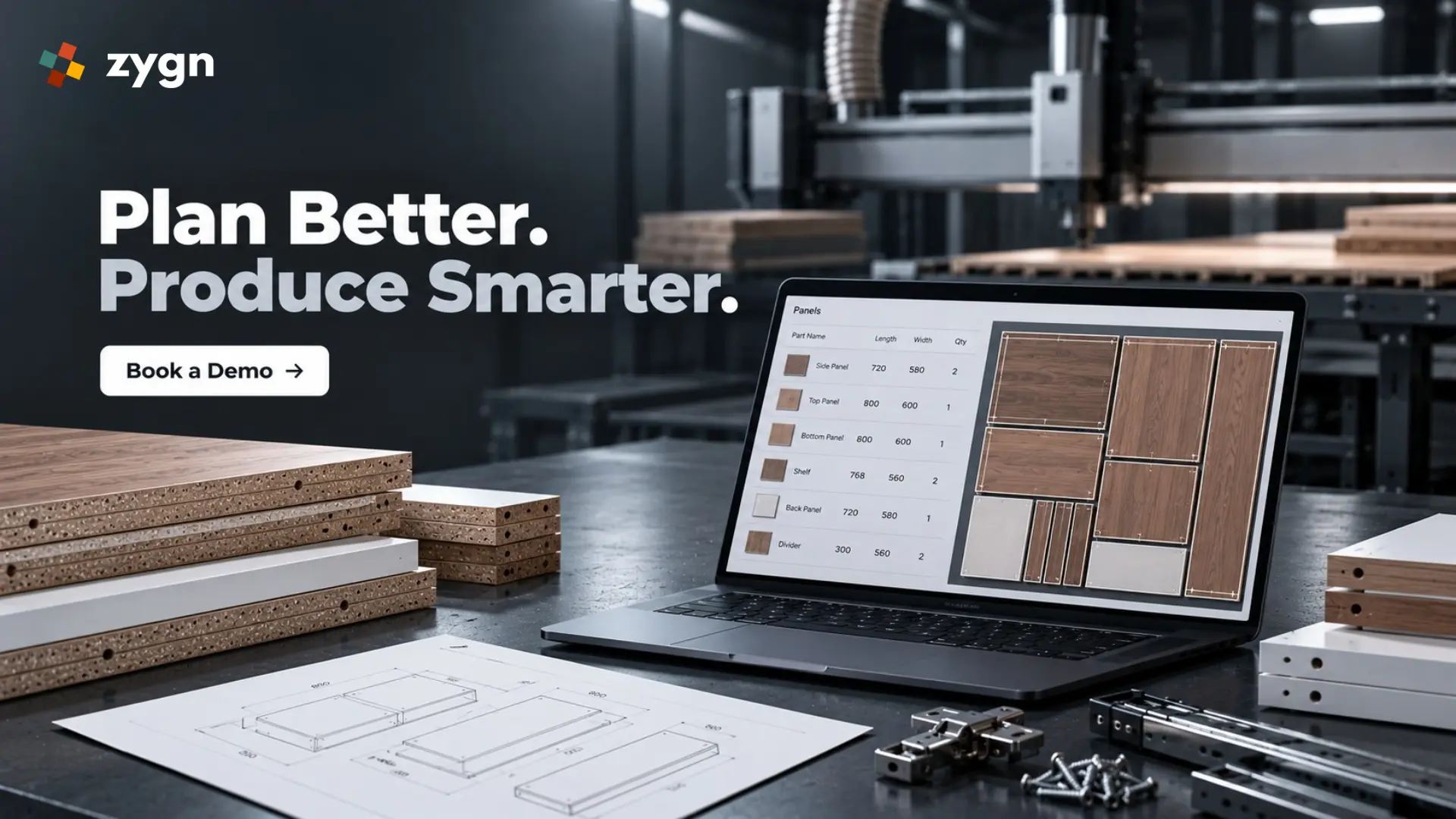
Make Furniture Production More Structured
Explore how ZYGN's cutting-list and connected business-management capabilities can support your planning and coordination needs.