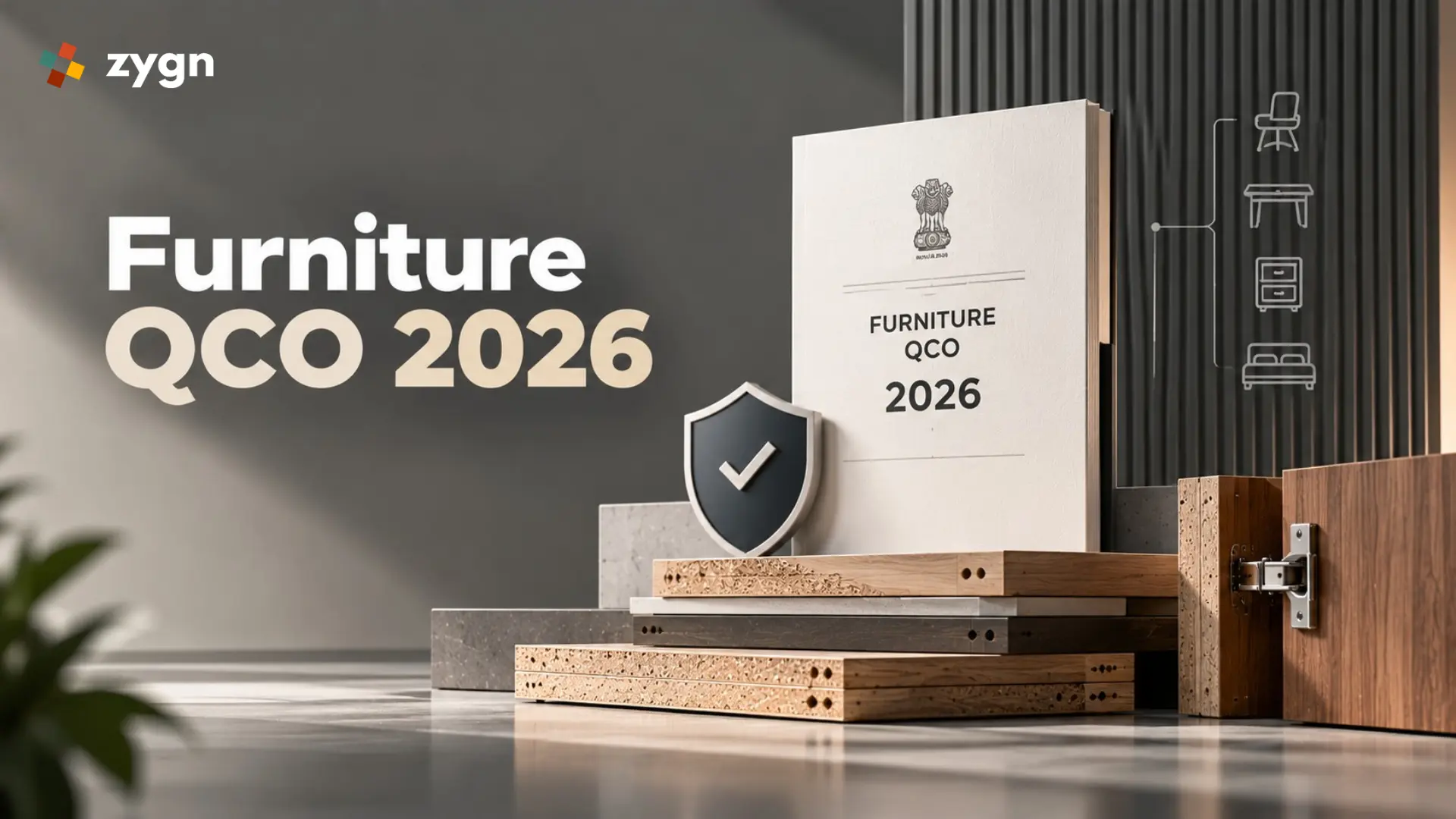
India's Furniture Quality Control Order (QCO) introduces mandatory quality requirements for specified furniture categories. For modular furniture manufacturers, this makes product classification, BIS certification, production consistency, and quality documentation increasingly important. As the furniture industry moves toward more formalized standards, manufacturers need structured workflows that support accurate material planning, controlled production, and reliable quality checks.
What Is the Furniture Quality Control Order?
The Furniture (Quality Control) Order, 2025, issued by the Department for Promotion of Industry and Internal Trade (DPIIT), establishes mandatory conformity requirements for specified furniture products under the Bureau of Indian Standards (BIS) framework.
The order was issued in February 2025, with implementation provisions taking effect in 2026.
Under the applicable requirements, covered furniture products must conform to their relevant Indian Standards and carry the required BIS Standard Mark under a valid licence, unless an exemption applies.
The purpose is to strengthen product quality, safety, and consistency across the furniture industry.
For manufacturers, this introduces a greater need to understand product standards, maintain appropriate quality processes, and verify regulatory requirements before placing covered products on the market.
However, not every furniture product or custom interior installation is automatically covered. Applicability depends on the product category, relevant standard, and current government notifications.
Which Furniture Categories Are Covered Under the QCO?
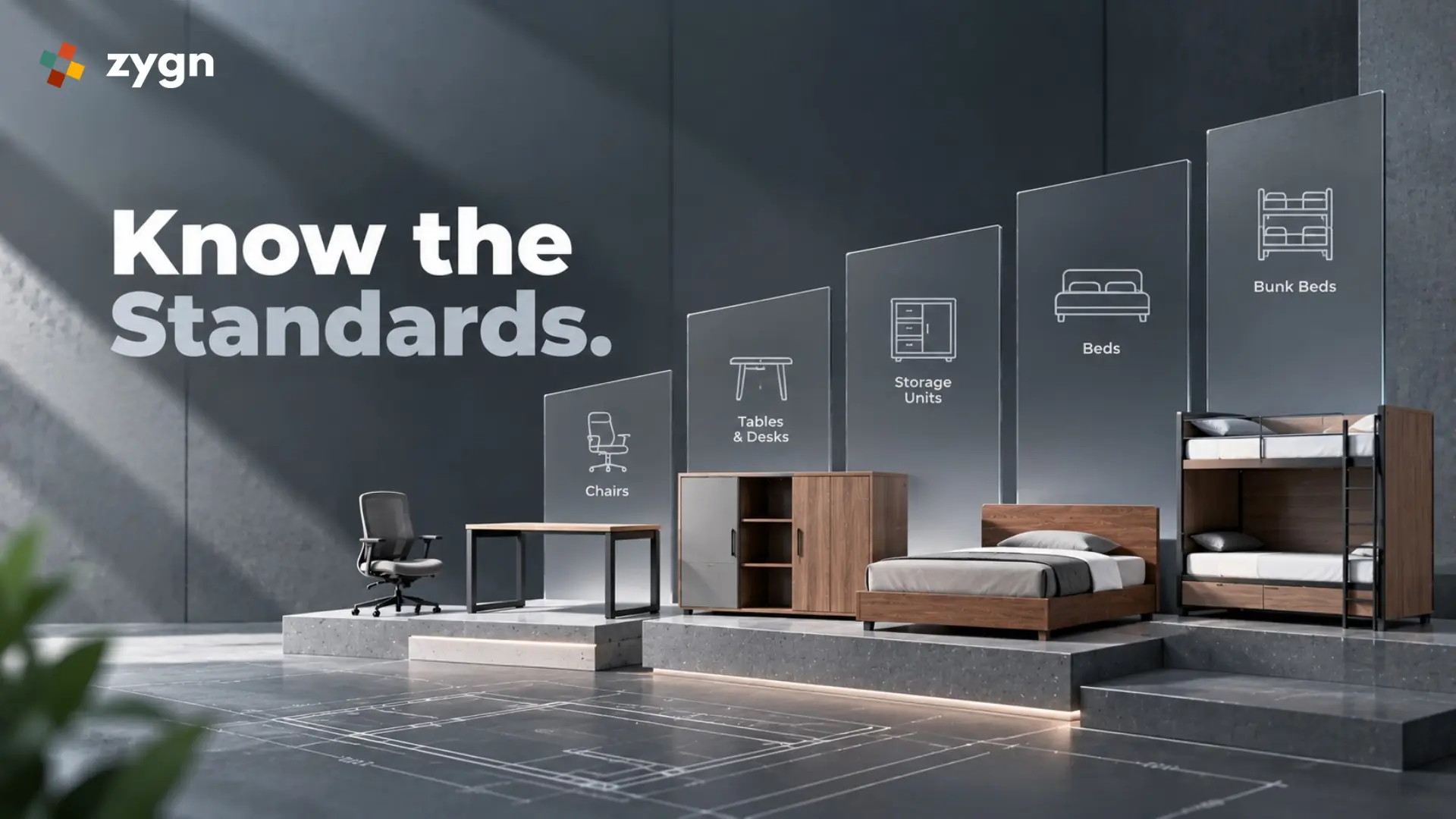
The Furniture QCO identifies six major product categories.
| Furniture Category | Relevant Indian Standard |
|---|---|
| Work Chairs | IS 17631:2022 |
| General Purpose Chairs and Stools | IS 17632:2022 |
| Tables and Desks | IS 17633:2022 |
| Storage Units | IS 17634:2022 |
| Beds | IS 17635:2022 |
| Bunk Beds | IS 17636:2022 |
These standards address product-specific quality and performance requirements.
For modular furniture manufacturers, storage units, tables, desks, and certain other categories may be particularly relevant.
However, the exact classification of modular wardrobes, kitchen cabinets, built-in furniture, and customized installations should be checked against the applicable standard and official BIS guidance.
Manufacturers should not assume that every modular product requires identical certification simply because it is made from engineered wood or produced using modular manufacturing techniques.
Why Furniture QCO 2026 Matters for Modular Manufacturers
Modular furniture manufacturing involves multiple connected processes. A typical production workflow may include design finalization, material estimation, cutting, edge banding, drilling, assembly, finishing, inspection, and dispatch.
When these activities are managed through disconnected spreadsheets, handwritten notes, or informal communication, maintaining consistency can become difficult.
Quality regulations make disciplined production processes more important. Manufacturers need to understand which products are subject to mandatory requirements and how their production practices support the applicable standards.
For growing furniture businesses, this creates an opportunity to improve operational structure rather than treating quality requirements as an isolated administrative activity.
The Biggest Challenges Furniture Manufacturers May Face
The first challenge is identifying whether a manufactured product falls within a regulated category. A business may manufacture office desks, storage cabinets, wardrobes, and customized interior components. These products may not all be treated identically under the QCO. Manufacturers need to review relevant standards and obtain appropriate guidance before deciding which products require certification. Incorrect assumptions about product classification can create compliance risks.
Furniture production often involves repeated manufacturing operations. Even when the design remains unchanged, variations in dimensions, materials, machining, assembly, or finishing can affect the final product. Maintaining consistent processes helps reduce avoidable defects and rework. For modular manufacturers producing multiple units or product variations, standardized production instructions become increasingly valuable.
Material selection plays an important role in furniture performance. Different products may require specific materials, components, construction methods, or performance characteristics. When material specifications are maintained across separate documents, production teams may work with outdated information. Structured material records help teams identify the intended specifications for each job. However, material tracking alone does not establish compliance with a BIS standard. Applicable testing and certification requirements must still be met.
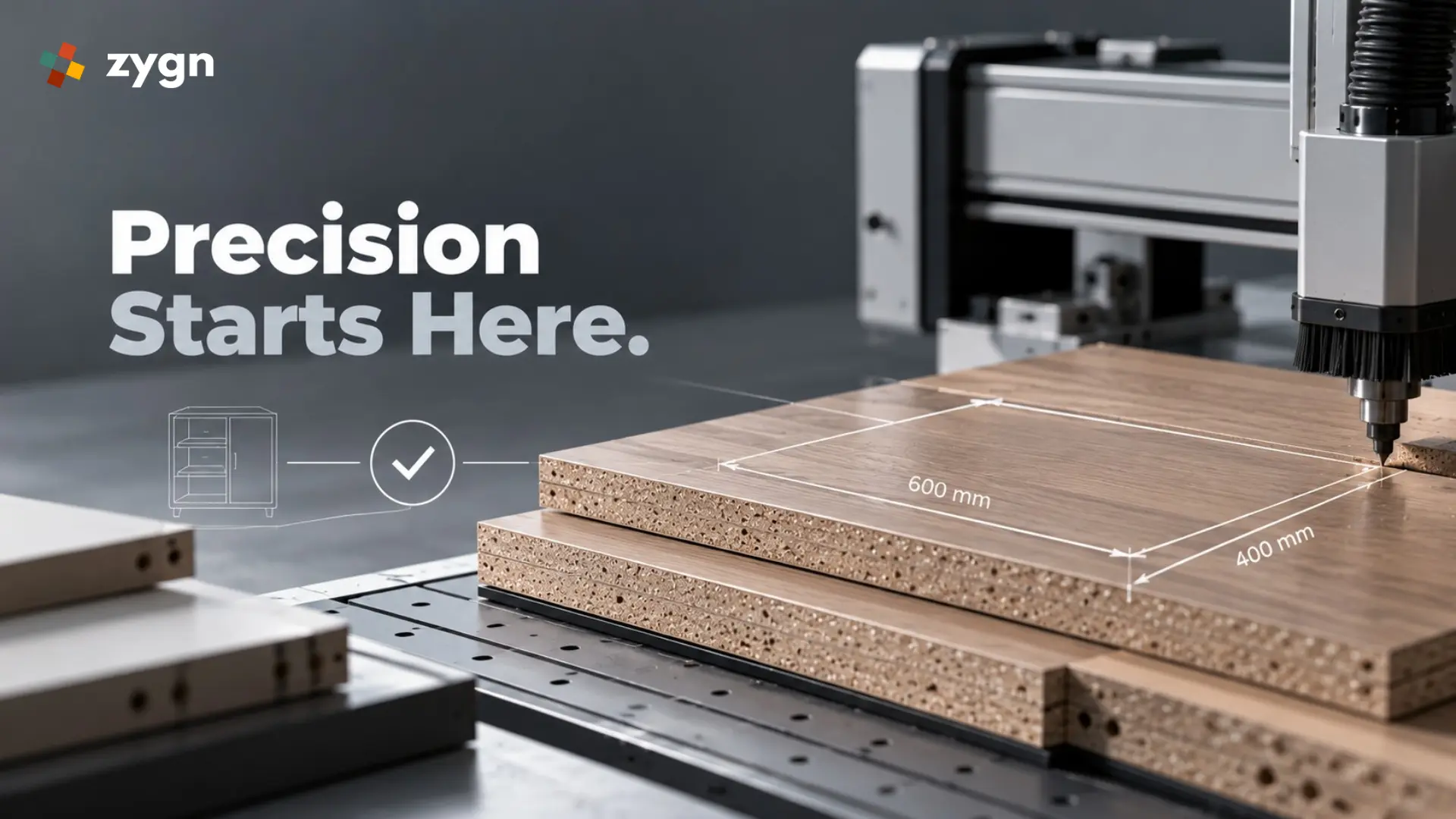
In modular furniture manufacturing, accurate cutting is essential. Incorrect panel dimensions, missed quantities, or poorly planned cutting layouts can lead to material waste and production delays. These errors can also affect downstream assembly. A structured cutting plan helps production teams work from clearer dimensions and quantities. For manufacturers handling repeated production jobs, this reduces dependence on informal cutting instructions.
Regulated manufacturing may require documented procedures, inspections, test records, and other evidence depending on the applicable BIS certification scheme. Businesses relying entirely on manual records may find documentation increasingly difficult as production volume grows. Clear records make it easier to review production activities and investigate quality issues. The exact records required for certification must be determined from the relevant BIS standard and certification requirements.
Why Structured Production Workflows Are Becoming More Important
Furniture manufacturing is not a single activity. It is a sequence of connected operations:
Each stage depends on accurate information from the previous stage. If the cutting list contains incorrect dimensions, assembly may be affected. If material specifications are unclear, purchasing and production teams may use different assumptions. If quality checks are not consistently performed, defects may remain undetected until later stages.
A structured workflow helps manufacturers establish clearer responsibilities and production instructions. This does not automatically make a product BIS-compliant. Instead, it supports the operational discipline needed alongside formal quality-management, testing, and certification processes.
How Cutting List Software Supports Modular Furniture Production
Cutting is one of the most important stages in modular furniture manufacturing. Manufacturers frequently work with plywood, MDF, particleboard, and other panel-based materials. Each project may require numerous panels with different dimensions and quantities.
When cutting requirements are prepared manually, errors can occur in measurements, quantities, and material planning. Cutting list software can help organize cutting requirements into a more structured process.
Depending on the software's capabilities, manufacturers may be able to prepare component lists, organize dimensions, and support cutting-related planning.
For production teams, the main benefits of structured cutting information include:
- Clearer component dimensions and quantities
- More consistent cutting instructions
- Reduced confusion between design and production teams
- Better organization of material requirements
- Easier review of cutting-related information
These capabilities support production efficiency, but cutting list software is not a substitute for BIS certification, product testing, or formal quality inspections.
Manual Production Tracking vs. Structured Production Planning
Consider a modular furniture workshop handling several customer orders simultaneously.
In a manual workflow, the design team may share dimensions through spreadsheets or messages. The production supervisor may prepare cutting instructions separately. Material requirements may be recorded in another file, while assembly progress is communicated through calls. When changes occur, teams must manually confirm which version of the information is correct. This increases the possibility of errors.
In a more structured workflow, approved dimensions, material requirements, cutting instructions, and production responsibilities are maintained consistently. Teams can work with clearer information and reduce repeated clarification.
The objective is not simply to digitize existing paperwork. It is to make production activities more organized, repeatable, and easier to review.
What Modular Furniture Manufacturers Should Do to Prepare
Manufacturers should approach QCO readiness as both a regulatory and operational responsibility.
Review the furniture categories listed in the QCO and determine which manufactured products may fall within those categories. Where classification is unclear, seek guidance from BIS or a qualified compliance professional.
Identify the relevant Indian Standards and review the latest government notifications. Different enterprise categories, exemptions, and transitional provisions may affect applicability. Do not rely only on the original February 2025 notification.
Where mandatory certification applies, review the BIS licensing process, product testing requirements, and applicable conformity-assessment procedures. Allow sufficient time for certification activities.
Maintain consistent dimensions, material specifications, and manufacturing instructions. Clear production information helps reduce avoidable variations between jobs.
Use structured methods to organize component quantities, dimensions, and cutting requirements. This can help reduce production confusion and material waste.
Establish quality checks and maintain the records required by the relevant standards and certification scheme. Production planning tools may support operational recordkeeping, but formal compliance records must satisfy the applicable regulatory requirements.
Ensure that employees understand approved specifications, production instructions, quality checkpoints, and their responsibilities. Consistent execution depends on both reliable processes and trained workers.
Why Small Furniture Workshops Should Pay Attention
Small workshops may assume that furniture quality regulations are relevant only to large manufacturers. However, applicability depends on the specific legal provisions, enterprise classification, product categories, and exemptions. Some micro and small enterprises may qualify for different implementation dates or exemptions under the applicable notifications. These distinctions should be verified carefully rather than assumed.
Even where a workshop is exempt from a particular mandatory requirement, structured production practices can still provide operational benefits. Accurate cutting instructions, organized material records, and consistent quality checks can help smaller businesses reduce rework and improve production reliability.
For workshops that are beginning to grow, these practices can also provide a foundation for handling more complex manufacturing requirements. Businesses evaluating basic cutting tools can explore this guide to wood cut list apps to understand the differences between simple project planning and more structured cutting software.
Where ZYGN Fits Into Structured Furniture Production
ZYGN is designed for interior design and project-driven businesses that need to manage connected operational processes. Its broader platform brings together functions such as BOQ Management, Procurement, Inventory, Project Management, and Accounts.
For businesses involved in modular furniture and interior execution, organized material planning and cutting-related workflows can support more consistent coordination. ZYGN's cutting list software page is relevant to businesses exploring structured cutting requirements and production planning.
However, ZYGN should not be presented as a BIS certification platform or a tool that automatically ensures compliance with the Furniture QCO. Certification, product testing, inspection, and regulatory documentation remain separate responsibilities. The value of connected software lies in helping businesses organize operational information while maintaining appropriate quality and compliance processes.
Frequently Asked Questions
What is the Furniture Quality Control Order 2026?
The Furniture QCO is a government regulation originally notified in 2025, with implementation provisions taking effect in 2026. It establishes mandatory conformity requirements for specified furniture products under relevant Indian Standards, subject to applicable exemptions and amendments.
Is BIS certification mandatory for modular furniture manufacturers?
BIS certification is mandatory for products covered by an applicable QCO unless an exemption applies. Whether a particular modular furniture product is covered depends on its classification and the relevant standard.
Which furniture products are covered by the QCO?
The listed categories include work chairs, general-purpose chairs and stools, tables and desks, storage units, beds, and bunk beds. Manufacturers should consult the latest BIS notifications for the precise scope.
Does the Furniture QCO apply to small workshops?
Applicability depends on the workshop's enterprise classification, products, and relevant exemptions or transitional provisions. Small businesses should verify the latest government requirements rather than assuming they are automatically included or excluded.
Can cutting list software help with furniture quality control?
Cutting list software can support accurate component planning and clearer production instructions. However, it does not replace formal quality testing, inspection, BIS licensing, or certification.
Does ZYGN provide BIS certification or guarantee Furniture QCO compliance?
No such capability is established here. ZYGN's cutting list and business-management offerings should be evaluated for their operational functions, not treated as substitutes for official BIS certification and compliance procedures.
Conclusion: Furniture Quality Standards Make Structured Manufacturing More Important
The Furniture Quality Control Order represents an important development for India's furniture manufacturing industry. For modular furniture manufacturers, it highlights the need to understand applicable product standards, certification obligations, and quality requirements.
At the same time, the broader shift toward formalized manufacturing creates a strong case for more structured production practices. Accurate material planning, organized cutting instructions, consistent production workflows, and reliable quality checks can help businesses operate with greater discipline. Compliance must still be addressed through the applicable regulatory process, but better operational systems can support manufacturers as they adapt to increasingly structured production requirements.
Build More Structured Furniture Production Workflows
Explore how ZYGN's cutting list and connected business-management capabilities may support your production planning needs.