Diwali is an important handover deadline for many interior design and design-build businesses in India. Clients want their homes, offices, and commercial spaces ready before the festive celebrations begin. But when multiple projects approach completion at the same time, overlapping deadlines, delayed materials, and last-minute changes can place enormous pressure on execution teams. Better scheduling, clear task dependencies, and realistic workload planning can help interior firms manage festive handovers without relying on constant overtime.
Why Diwali Creates a Project Scheduling Challenge for Interior Firms
The weeks leading up to Diwali can be especially demanding for interior design studios. Residential clients want to move into newly completed homes before the festival, while commercial clients aim to open renovated spaces or complete office interiors ahead of planned celebrations and business activities. For project managers, this often means coordinating several handovers within a very narrow window.
A studio might have three residential projects, two commercial fit-outs, and several smaller installation jobs all approaching their final stages simultaneously. Each project has its own procurement requirements, vendor commitments, finishing activities, inspections, and client approvals. Individually, these schedules may appear manageable. The difficulty begins when several projects compete for the same employees, vendors, or materials at the exact same time. Without a coordinated master schedule, the festive rush quickly spirals into urgent follow-ups, rescheduled work, and continuous overtime.
Why Last-Minute Project Rushes Happen
Festive-season delays rarely begin during the final week before handover—they often develop much earlier in the project lifecycle. A design approval delayed by a few days, a material order taking longer than expected, or a site activity held up by incomplete predecessor tasks all eat into available execution time. When these delays are not reflected in the schedule, the handover deadline remains static while the working window shrinks.
As the deadline approaches, teams attempt to recover lost time by working longer hours or handling multiple interdependent activities simultaneously. This creates rework, compromised quality, and severe employee fatigue. The underlying problem is rarely a lack of effort—it is a lack of visibility into how early delays compound across the remaining timeline.
The Biggest Challenges During Festive-Season Handovers

Interior firms frequently assign skilled employees and supervisors across different projects. During the festive season, multiple sites may require carpenters, installers, electricians, painters, or finishing teams at the same time. When these requirements are planned in isolation, managers only discover scheduling conflicts when execution is already due to begin, forcing teams to scramble between sites. A consolidated view of upcoming activities helps managers identify and resolve overlapping workforce demands weeks in advance.
Interior completion depends heavily on material availability—cabinet hardware, furniture components, lighting fixtures, laminates, and stone must all arrive before installation can proceed. If a single critical item is delayed, several downstream tasks grind to a halt. During periods of peak festive demand, supplier lead times and delivery commitments require especially tight coordination. Procurement schedules must be reviewed directly alongside project timelines rather than in disconnected silos.
Clients frequently request modifications as handover approaches—a revised paint finish, extra storage, or lighting adjustments. While these changes may appear minor to the client, they directly impact purchasing, fabrication, installation, and inspection. When changes are accepted without evaluating their scheduling impact, execution teams are left with unrealistic expectations. Every significant modification must be formally weighed against the remaining project timeline.
During high-stress periods, instructions are often scattered across phone calls, WhatsApp messages, and verbal site chats. When responsibility is not explicitly assigned, critical activities slip through the cracks as teams assume someone else is handling an installation or sign-off. Clear task ownership reduces confusion by ensuring every critical activity has an assigned person, expected completion date, and visible status.
Repeated overtime often seems like the quickest way to recover a delayed schedule, but prolonged working hours inevitably cause fatigue and reduce craftsmanship. In interior fit-outs, where finishing quality and precision matter most, rushed execution leads to sloppy work and expensive rework. A successful handover should never depend on burning out the team that delivers it.
Why Gantt Charts Are Useful for Diwali Handover Planning

A Gantt chart provides a visual representation of project activities across a live timeline. Instead of viewing tasks as an isolated checklist, project managers can immediately see when each activity begins, how long it will take, and which tasks depend on earlier milestones. For festive-season projects, this visibility is invaluable.
Consider a residential project scheduled for completion before Diwali: the workflow spans design approval, material procurement, fabrication, site preparation, installation, finishing, inspection, and handover. If fabrication is delayed, installation must move; if installation moves, painting and inspections are squeezed. Using Gantt chart project management software, teams maintain a structured view of planned milestones and dependencies, allowing managers to anticipate bottlenecks before they reach the job site.
A Sample Four-Week Diwali Handover Schedule
Consider a hypothetical interior project entering its final month before the agreed handover date:
| Project Activity | Week 1 | Week 2 | Week 3 | Week 4 |
|---|---|---|---|---|
| Final Design Approvals | ✓ | |||
| Pending Material Deliveries | ✓ | ✓ | ||
| Fabrication Completion | ✓ | ✓ | ||
| Site Installation | ✓ | ✓ | ||
| Electrical and Finishing Work | ✓ | |||
| Quality Inspection | ✓ | |||
| Client Walkthrough | ✓ | |||
| Final Handover | ✓ |
Illustrative schedule only. Actual project durations and sequencing depend on project scope, site readiness, material availability, and dependencies.
This illustrative schedule highlights how critical activities must conclude before final inspection and handover. If fabrication slips into Week 3, the available buffer for installation and snagging disappears. Rather than assuming the team can absorb the delay through overtime, project managers should immediately review task dependencies and reallocate resources to determine whether the original deadline remains realistic.
How Task Dependencies Affect Festive Project Deadlines
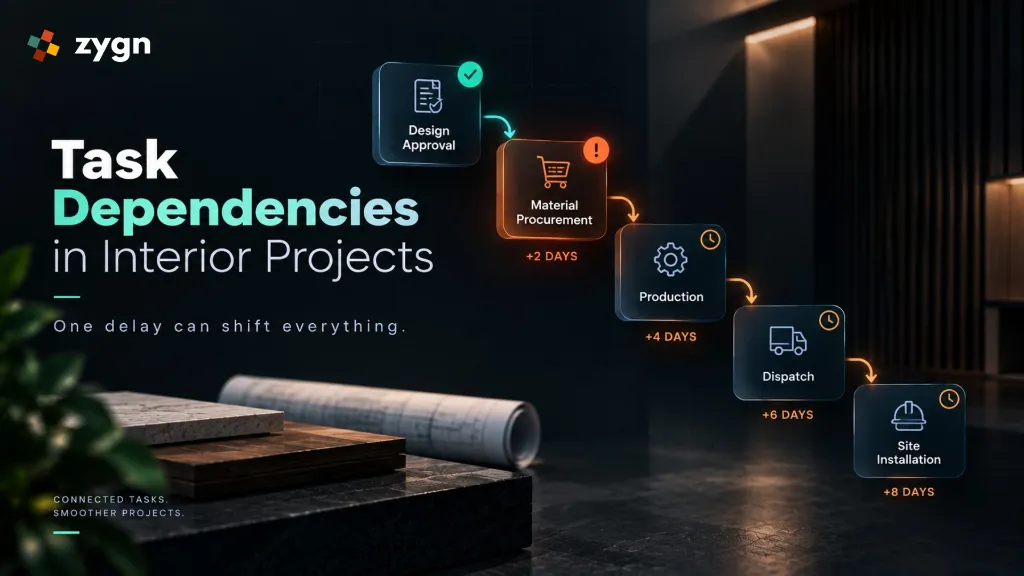
Interior projects contain many activities that cannot be completed independently:
Each stage depends directly on earlier work. A two-day delay in procurement does not merely cause a two-day delay to the project—if the installation crew is already committed to another site, the next available slot may be a week away. Understanding task dependencies in interior design projects allows managers to identify which activities sit on the critical path and must be protected at all costs.
How to Plan Multiple Diwali Handovers Without Overloading Teams

Begin with the agreed client handover date and identify every activity required beforehand—installation, finishing, inspection, corrections, and client walkthroughs. Working backward establishes realistic milestones for each phase and reveals early on whether the remaining calendar duration is truly sufficient.
Never schedule projects in isolation. Review upcoming milestones across all active sites simultaneously to spot trade conflicts. If three projects require the same installation team during the same week, resolving the overlap before execution begins prevents costly on-site standstills.
Identify activities that directly dictate the final completion date—such as material deliveries, design approvals, fabrication sign-offs, and site readiness. Review these high-risk dependency tasks with greater frequency as festive milestones approach.
Every critical activity must have a designated individual responsible for its execution and coordination. Clear ownership eliminates confusion across multi-site teams, ensuring project heads immediately know who to contact for status updates and blockers.
Never schedule final installation work right up to the handover morning. Maintain a dedicated buffer for quality checks, touch-up painting, deep cleaning, and final client sign-offs. While buffers cannot prevent every delay, they eliminate reliance on emergency eleventh-hour fixes.
Monitor team allocations to prevent continuous overtime and double-booked assignments. When client deadlines cannot be achieved safely without severe burnout or compromised craftsmanship, communicate constraints early and propose realistic phased handover solutions.
A schedule is only valuable when it reflects site reality. When materials are delayed or approvals lag, immediately recalculate the remaining timeline. An honest, adjusted schedule provides actionable direction, whereas an outdated schedule showing impossible on-time dates creates panic.
Why a Static Project Schedule Is Not Enough
Many interior studios draw up a schedule at the project's inception in Excel or PDF. However, as execution unfolds, actual site progress quickly diverges from the initial plan. If changes are not recorded centrally, teams continue working from outdated assumptions—materials arrive without site readiness, or painters arrive before carpenters finish. Structured project timeline management ensures schedules reflect real site conditions, enabling timely decisions about resources and client expectations.
How Better Scheduling Helps Prevent Team Burnout
Burnout during the festive rush is not caused by high workload alone—it is exacerbated by shifting priorities, conflicting instructions, and unrealistic deadlines. When designers and supervisors spend their days firefighting emergencies and fielding anxious client calls, productivity collapses. A structured schedule sets clear expectations, clarifies urgent priorities, and prevents small delays from turning into late-night crises. While software cannot replace sensible staffing and adequate rest, intelligent planning removes avoidable chaos and protects your team's well-being.
How ZYGN Supports Interior Project Scheduling
ZYGN provides a unified operating system built specifically for interior design and design-build firms. By connecting Sales CRM, Design Flow, BOQ Management, Procurement, Site Tracking, Accounts, and HR, ZYGN gives studios complete cross-project visibility. Its interior project management software and live Gantt chart engine help firms coordinate multiple festive handovers with clarity, realistic schedules, and confidence.
Frequently Asked Questions
Interior projects may face delays because multiple clients request handovers around the same period. Material availability, design approvals, vendor schedules, and overlapping workforce requirements can create additional pressure on execution timelines.
Interior firms can manage multiple handovers by reviewing project schedules together, identifying critical dependencies, assigning clear task owners, coordinating procurement, and maintaining realistic completion dates.
A Gantt chart displays project activities, durations, dependencies, and milestones on a timeline. It helps managers understand how delays in one activity may affect subsequent tasks and the planned handover date.
Begin planning early, track critical material deliveries and approvals, review actual progress regularly, and update schedules whenever project conditions change. Keeping buffer time for inspections and corrections also helps.
Better scheduling can reduce avoidable pressure by clarifying priorities, identifying conflicting assignments, and improving workload planning. However, preventing burnout also requires realistic staffing, appropriate rest, and sustainable working conditions.
ZYGN connects project management with other interior business functions, including BOQ, procurement, site operations, and HR. This supports clearer coordination and more structured project execution.
Conclusion: A Successful Diwali Handover Starts With Better Planning
The festive season creates important opportunities for interior design and design-build businesses. But completing multiple projects before Diwali requires careful coordination across teams, vendors, materials, and schedules.
When deadlines overlap and project dependencies are not clearly managed, the final weeks can become stressful for everyone involved. Gantt charts, realistic project timelines, clear task ownership, and regular progress reviews help businesses manage this complexity.
The goal should not be to complete every project through last-minute overtime—it should be to create a schedule that supports reliable execution, realistic client commitments, and sustainable team workloads.

Plan Better. Deliver With Confidence.
Bring project scheduling, task responsibilities, procurement, and site operations into one connected environment with ZYGN.